The Horrors Of War
Andersonville_Prisonx600
AndersonvilleStonex600

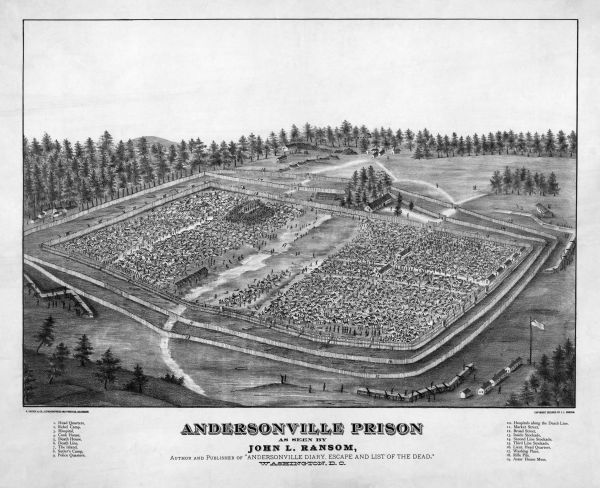
Andersonville Prison.  That phrase conjures up horrible images of men living in conditions beyond comprehension.  It was notorious even back when it opened.  Any man who was taken prisoner feared being sent there.  Word had spread about the conditions that turned strong men into walking skeletons.

The prison’s official name was Camp Sumter and it was located near Andersonville, Georgia.  It opened in February 1864 and ran for fourteen months.  It was built to house Union prisoners after the Northern forces moved closer to the prison located in Richmond, Virginia. None of the prisoner of war camps on either side had adequate food or housing for the men taken prisoner but Andersonville was the worst.  There wasn’t even enough food for the Confederate men assigned there as guards.

The camp was originally intended to house 10,000 men but within a few months over three times that number lived behind those walls.  During the time it was opened over 45,000 men were imprisoned there.   

The creek that ran through the camp soon became fouled with human waste and disease was rampant.  Men struggled every day with hunger, parasites, disease, and guards.  They also feared each other.  Desperate men banded together to form groups called “Raiders”.  These men would attack other prisoners and steal food, blankets, clothing, and any money that they possessed.

The commander of Andersonville was Captain Henry Wirz during the entire time it was opened  until it closed in April 1865.  He was arrested after the war ended and put on trial for his horrendous treatment of the prisoners.  Wirz was convicted and sentenced to death.  He was executed in Washington, D.C on November 10, 1865.

A lot of the men that died were buried in mass graves and records for the others were vey unorganized. One prisoner who was asked to assist with the record keeping was Dorwent Atwater.  He feared that the Confederates would try to cover up the amounts of men that were dying on a daily basis so he turned one set of records in and hid another set.  This was used to paint a more accurate portrayal of life and death in the camp.

After the war ended a National Cemetery was created.  There are 13, 714 men buried there.  921 of them are marked “unknown”.  In the grave marked number 747 was a young man named Oscar Rogers.

Oscar’s family lived in New Milford at the time the Civil War began in 1861.  Though the reason that compelled the young man to join the fighting has been lost to time, records show that he signed up in September, 1862.  New Milford’s quota for recruits was 80 men. Over 139 men from the town signed up.  

By September 1862, the romantic notion of war had been replaced with the stories of true horror.  So Oscar Rogers would have known what exactly he was signing up for when he joined that month.  He was assigned to Company A 12th Cavalry Unit.  This regiment would fight in some of the bloodiest battles including Chancellorsville, Gettysburg, and Antietam.  

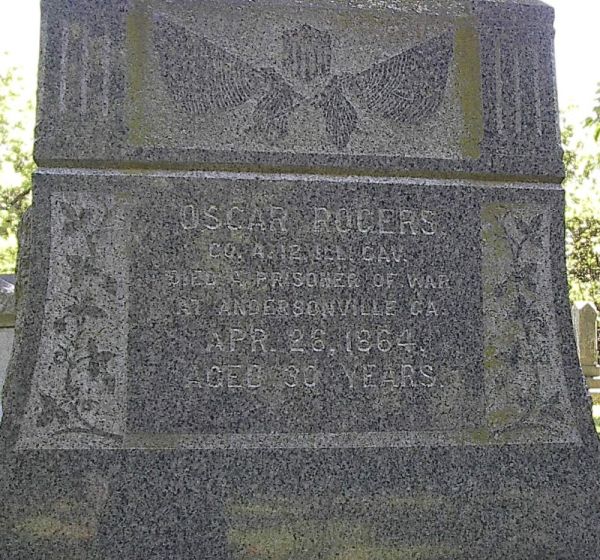
Research did not reveal exactly when Oscar was taken prisoner. But his name appears in Atwater’s records.  Oscar Rogers died on April 26, 1864 from starvation and dysentery.  He was originally buried in the cemetery at the prison.  But his body was retrieved by his family and brought home to rest with his parents in the New Milford Cemetery.  His tombstone reads:

Oscar Rogers
Co. A 12th IL Cavalry
Died Prisoner of War at Andersonville, Ga.
April 26,1864
Aged 30 years

Next to Oscar’s tombstone is the stone of his sister, Fannie.  She married Dr.James Rosecrance and together they built a house to use as a clinic to assist veterans after the war.  Later, they would focus more on housing young children who were orphaned.  When Fannie died in 1916, the house became the Rosecrance Memorial Home for Children.  Their legacy has continued and spread to help individuals with substance abuse and behavioral health services.  

Oscar Rogers, like so many other men and women from Winnebago County, did not hesitate to step forward when his country needed him. His family turned their grief outward to help other veterans when they returned wounded from the battlefields.  Their story of sacrifice and dedication to help other veterans and their families is only one of the thousands of men and women from this county who have served their country.  


Copyright © 2017 Kathi Kresol, Haunted Rockford Events

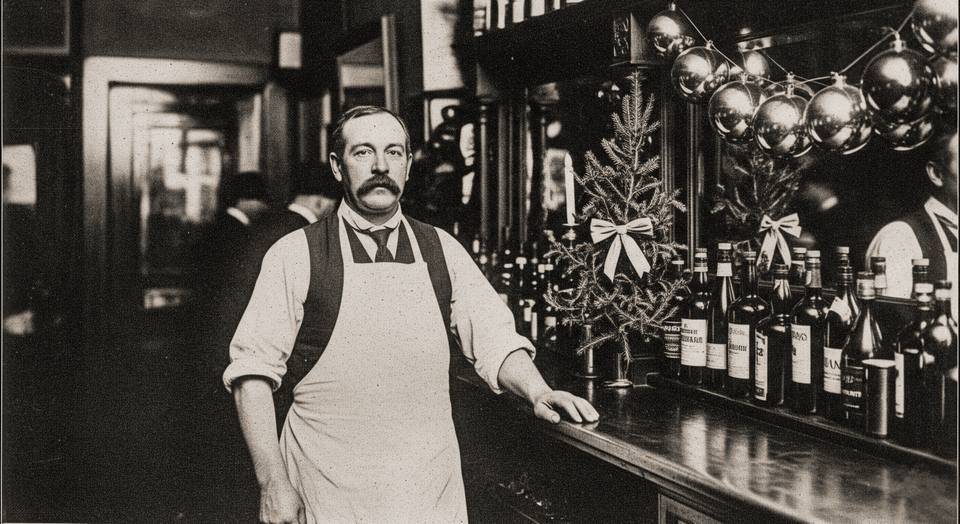
A Christmas Tragedy
a-christmas-tragedy-x960-W

December 22, 1905 started out bright and chilly.  Mr. Enderle was walking down South Main Street shortly after 6:00a.m., when he noticed a man staggering into the Harbough’s Restaurant.  Enderle thought he recognized the man so he pushed open the door.  He found a man that he considered to be a close friend on the floor covered in blood.

Enderle was shocked by the condition of his friend, Gottlieb Arnold.  Gottlieb operated a tavern near the intersection of South Main and Green Streets.  When Enderle questioned Gottlieb, he stated, “My God, I have been shot.”

Gottlieb also told Enderle that he was putting money into the cash register when a man stepped from behind the ice chest.  The man said, “Hold up your hands,” before he opened fire.

Enderle agreed to go back to the tavern to check on the money.  As he pushed open the swinging doors, he found another injured man on the floor.  Enderle knew that the authorities had already been called so he locked up the money that still sat on the bar.  Later it would be determined that only $30.00 was taken.

The other injured man was David Fuller, another friend of Gottlieb’s.  Both of the injured men were rushed to Rockford Hospital for treatment.  Fuller would live for several months before finally passing away from his wounds.  Gottlieb was taken into surgery but the bullet had ripped through his liver, completely destroying it.  There was nothing the doctors could do to save him.

This crime shocked the entire town for many reasons.  Gottlieb Arnold was a well-known and respected business owner.  He was also known to be a kind, generous man who served his community through the Germania Society and the Bar Tenders Union.  Gottlieb was fair to his employees and customers.  But he was best known to be a wonderful family man.  He had a lovely wife Annie and four children that were under the age of nine.

Another shocking element of this crime was how close it was to Christmas.  Everyone who knew Gottlieb knew that the Christmas season was his favorite time of year.  He was especially excited that year because he found the perfect presents for his family.  Gottlieb had purchased some beautiful dolls for his girls and rocking horses for the boys.

Gottlieb told everyone who came into the bar about the presents he had purchased. He even kept the presents at the bar just to ensure that the children did not find them.  It was these presents that would catapult this story into the headlines of all the local papers.

Authorities were searching the tavern for clues and collecting evidence when they found the stash of presents that Gottlieb had hidden.  It was common practice to collect, register and then store all the evidence from a crime scene but this was a special case.  The men that were charged with the task decided not to confiscate the toys that they found in the tavern.

Gottlieb’s funeral was hosted on Christmas Eve at the Arnold house on Charles Street.  Family and friends escorted Gottlieb’s body to its final resting place at Cedar Bluff Cemetery.   When the family returned to the house afterwards, several officers came to pay their respects and to drop off the presents for the family.  Later, Gottlieb’s widow would state that the officers’ gesture meant more than they could ever know.

It would be some of those same officers who would attempt to get justice for the murder of Gottlieb.  It took over eight months but they finally arrested someone for the crime in August of 1906. Stone Boyce was a drifter from South Carolina who had been suspected of several crimes.  He was arrested when he was identified by one of the witnesses of Gottlieb’s murder as the man he had seen running from the tavern that morning.  Unfortunately, there was not enough evidence to prosecute Boyce for the murder of Gottlieb Arnold and he was released.

Some townspeople thought that justice still prevailed a few months later when the word came that Stone Boyce had been killed while attacking a woman back in South Carolina.  The woman’s husband heard the screams and grabbed his gun when he ran to rescue her.

Though Gottlieb’s tavern was closed because of his murder, his wife Annie would eventually open a grocery store and bakery on Crosby Street in Rockford.  Annie would live to be ninety four years old and was laid to rest by Gottlieb’s side in Cedar Bluff Cemetery when she died in 1966.

According to her friends and family, Annie never forgot the kindness of the Rockford Police Officers who helped get Gottlieb’s presents to his children.  Their selfless act made that dark Christmas of 1905 a little brighter for her family.


Copyright © 2017 Kathi Kresol, Haunted Rockford Events

The Phantom Pain

Originally published in The Rock River Times.

An article written in the Daily Gazette in March 1886 told the strange story of Goodliff family.  Mrs. Goodliff had suffered for some time with pain in her leg.  The pain eventually grew so bad that couple had to make the difficult decision to have Mrs. Goodliff’s leg amputated.

The operation went well and Mrs. Goodliff was hopeful as she began the long journey to recovery.  But it was not very long before she began to suffer from pain all over again.  This pain seemed to be centered in the leg that now was buried in the cemetery. She endured the pain as her doctors and her family watched helplessly.

Doctor Townsend, the physician who had performed the amputation of Mrs. Goodliff’s leg, consulted with other doctors about the “phantom pain.”  But they had no idea what could alleviate the poor woman’s suffering.  There were times that the pains were so bad that she would scream in agony.  She stated that it felt that her leg was still attached and that something was wrapped too tightly causing the leg to throb with pain.

Finally, William’s mother could not stand her daughter-in-laws cries any longer.  She convinced Mr. Goodliff that something must be done.  They decided that Mr. Goodliff needed to dig up the leg and bring it home to show his wife that the leg had been amputated.

So William, accompanied by a friend, went to the cemetery and unearthed his wife’s leg.  When he found the leg, he unwrapped it and found that the leg actually did contain tight bindings.  One wrapping was at the toe area which is exactly where his wife complained of feeling the worst pain.  The other was wrapped tightly just below where the leg had been separated.  William carefully unwrapped the bindings and removed the stockings to free the leg from anything that might cause any discomfort.  He packed up the leg carefully and carried it back to show his wife.

William was pleased when he returned home to find his wife’s pains were relieved.  The article went on to say that many of the family and friends of the couple were with Mrs. Goodliff at the home while Mr. Goodliff was at the cemetery.  Later, everyone was shocked when they realized that Mrs. Goodliff’s pain receded at exactly the same time as William loosened the bindings on the amputated leg, though these incidents occurred many miles apart.

Even the doctors that were attending Mrs. Goodliff stated that they had never seen a case similar to the young woman’s.   She recovered quickly after this incident and Mr. Goodliff eventually returned the amputated limb to the cemetery where it remained until his wife’s death.


Copyright © 2017 Kathi Kresol, Haunted Rockford Events
Hitchhiking Wraith

Originally published in the Rock River Times

Most people in this area have heard of the Resurrection Mary story from Chicago.  But Rockford had its own hitchhiking ghost during the summer in 1933.  What makes this story especially intriguing is that the Chicago story was first reported in 1934 or 1935 (depending on the source).

In an article written in the Register-Republic on July 15, 1933, a couple told of their encounter with the “hitch-hiking wraith.”

The couple was returning to Rockford after a visit to the Century of Progress Exposition in Chicago.  They were on Highway 20 which was more commonly called the U.S. Grant Highway.  Theirs was the only car on the highway when they spotted the woman on the side of the road.  She was dressed all in black and just seemed to appear in their headlights.

They pulled to the side of the road and asked if she needed some help.  The woman accepted their offer and slipped into the back seat.  They all spent some time chatting.  The couple noticed that the young woman was beautiful and dressed as if going to a party.  She spoke of friends and dancing the night away.  The woman told the couple her name was Mrs. Johnson and gave them her address in Rockford.

Mrs. Johnson spoke quite a bit about her life in Rockford and the party she had attended.  The conversation wound down after a while and the couple noticed that the woman had gone silent.  They figured that she had fallen asleep.  The wife leaned over the seat to check on the woman and was horrified to notice that the back seat was completely empty.

The husband brought the car to a sudden stop and the couple searched the car and the surrounding area for the young woman.  They found no sign that she had even been in the car.

They traveled the rest of the way back to Rockford in silence.  Neither of them got much sleep during that long night. In the morning they discussed the incident, trying to remember every detail that the girl had shared with them.

They decided to go to the address she had provided the night before.  They arrived at the house and hesitantly approached the door.  The man that answered the door looked very confused as they explained the whole situation.  He answered that yes, a young lady named Mrs. Johnson had lived there.  But she had been killed some time ago when she was struck while walking on the highway.

The man showed them a picture of Mrs. Johnson and they were able to identify the girl in the picture as the one they had picked up the night before.  Unfortunately, the couple was not identified in the article nor was Mrs. Johnson’s address shared.

Research into possible deaths on the U.S. Grant highway did reveal that there was a Mrs.Johnson that was struck by a car and killed on that road in 1932.  She was out with two other women when for some unknown reason they pulled their car off the highway by a little cafe outside of Belvidere.  The three women decided to walk on the highway and were struck by a car driven by a local businessman.  Mrs. Johnson was instantly killed and the other women suffered severe though not life-threatening injuries.   The three women had spent the evening at a party and were supposedly intoxicated.  This was during prohibition and there was an investigation into where they had obtained the liquor.  Mrs. Johnson was divorced and the mother of two small children.  The last mention of the accident stated that the authorities were still attempting to find the relatives of Mrs. Johnson.

The stories of the ghostly hitch-hiker along U.S. Highway 20 continued for quite some time during 1933.  All of the stories were very similar and spoke of the confusion and fear of the good samaritans when they realized that their passenger disappeared without a trace from the back of a moving vehicle.


Copyright © 2017 Kathi Kresol, Haunted Rockford Events

An Unbelievable Crime: Frank And Ida Armstrong

Winnebago County Deputy Sheriff George Bubser thought he had seen it all.  He was the deputy sheriff of the county in 1921, during prohibition.  He had seen murders, suicides, and men who had been blinded by the illegal hooch that was sold on the streets.  But he was completely baffled by the boy that sat before him.

Sheriff Bubser knew the boy, of course.  Most people in Rockford knew the small, crippled boy named Herbie Steward.  The Winnebago Chapter of the American Red Cross had collected money to have the boy’s legs straightened so that he could use crutches instead crawling around on his hands.  After Herbie returned from the surgery in Chicago, people were pleased to see him taking classes at the business school in Rockford.  The eighteen year old had rigged up a car so that he could use hand levers for the pedals.

Though Herbie lived in New Milford with his foster parents, Frank and Ida Armstrong, even folks in Rockford knew the boy.  When a police officer brought Herbie into the Sheriff’s office neither of the men believed the story the boy told.  The sheriff sent some men out to the Armstrong farm in New Milford and was waiting until they reported in.  It wasn’t very long until he got the phone call.

The men described the unbelievable scene they found.  They arrived after dark and had to use their flashlights as they opened the door to the darkened house.  The small beams of light illuminated the gruesome scene.  They first spotted the body of Frank Armstrong lying in the doorway between the kitchen and dining room.  Most of Frank’s head had been blown off by the blast of a shotgun.

In the dining room, they found the body of fifty five year old Ida Armstrong.  Her head was resting on her hands with her face down on her plate of food.  The officers were shaken by the scene and backed out of the house to wait for the coroner.  Back at the office, Bubser was having trouble matching the brutal crime scene to the young boy in front of him.

Bubser asked Herbie to tell his story again.  Herbie stated that he knew that Frank was angry with him for coming home late that night.  Frank flew into a rage when he announced that he knew Herbie had skipped school that day to go ride around with the girls.  Herbie decided he wasn’t hungry anymore and crawled from the dining room into the kitchen where he kept his crutches.  He grew frightened as he heard Frank push back his own chair to follow Herbie.  Frank was a large man and he had, according to Herbie “beaten him severely” in the past.  Herbie grabbed one of the shot guns that Frank left loaded all throughout the house.  Later, Herbie would say he meant to just scare Frank to get him to stop.  But Herbie fired immediately, hitting Frank in the head.

Herbie heard Ida scream once so he reloaded the shotgun.  He had to scoot himself across the floor to get a clear shot and then he fired at the back of her head.

Then Herbie crawled to his crutches, grabbed the shot gun and a pistol that was in the house and placed them in the car.  He also grabbed his dog before he left.  Herbie stated that he originally was going to drive somewhere and shoot himself but then he lost his nerve.  He drove into Rockford to find a police officer to turn himself in.

Herbie Steward’s trial was a sensation in Rockford.  Over 600 people crammed into the courtroom every day.  Defense witnesses stated that Frank and Ida both beat Herbie while witnesses for the prosecution denied those claims.  The men on the jury convicted Herbie for the manslaughter of Ida Armstrong.  They sentenced him to the state penitentiary for five years.  The judge thought the jury got the conviction right but disagreed with the sentence.  He changed it to five years in the State Reformatory School where Herbie could continue his treatment for his legs and his schooling.  Afterward, both sides felt that they had lost.  Neither side felt that justice had been served either for the Armstrong’s or for Herbie.   That sentiment was shared by Deputy Sheriff Bubser, who later stated that he never forgot this horrendous crime or the young boy who committed it.


Copyright © 2017 Kathi Kresol, Haunted Rockford Events

Phantom At The Factory
Union furniture

Peter Reed was almost finished with work on November 7, 1889.  It was 6:00p.m. and he  had put in a long day at the Rockford Union Furniture Factory.  Peter was a well-respected carpenter and his role on that day was as a supervisor for some of the work being done on the new factory.  Peter turned to head down the darkened staircase.  For some reason, he decided not to use the light that he carried.  That would prove to be a fatal error.

Peter did not realize that his location was not where he imagined it to be.  He raised his foot to descend the staircase but instead stepped into the open doorway of the elevator shaft.  Peter’s scream could be heard all through-out the building as he fell twenty six feet down. 

The men that arrived on scene were very surprised to find Peter still alive.  They loaded him into a wagon and took him to his house on Kishwaukee Street.  Dr. Catlin was summoned by some of Peter’s co-workers and he rushed to treat the semi-conscious man.   Peter suffered a nasty gash across his face, broken ribs and appeared to have bruises all over his body but Dr. Catlin feared that the worst damage was internal. 

Peter suffered horribly from his injuries through that long night before finally succumbing to his injuries.   He was only fifty years old when he died.   Peter’s funeral was held at the Emmanuel Lutheran Church where his family had belonged for years.  Over 5,000 people came to pay their respects to Peter’s wife Johanna and their four children.  Peter’s body was taken to the Scandinavian Cemetery where he was laid to rest.

But that was not the end of Peter’s story.  Rumors started to circulate a few weeks later.   One of the night watchmen of the Union Factory reported that he heard sounds in the building when there was no one else in the building.  The report stated that the guard heard the sounds of footsteps and terrible moaning that seemed to come from all directions at once.  He would search the building but there was never anyone else around.   According to the guard the sounds would continue throughout the night, filling him with terror.  He would become so frightened that he would lock himself in one of the offices until it was time for him to leave.

This night watchman shared the story with some of the other workers that arrived in the morning.  He was very frightened by the possibility that the factory had a ghost.  The guard believed that Peter Reed was haunting the factory because of his awful accident.

 The story leaked to the press after one particular night when the guard became so frightened by the moans and shrieks that he finally left his job vowing never to return.  Towns people began to gather outside the building on 18th Avenue to see if they could witness the claims made by the guard. 

Word got back to the family and Johanna was very distressed to hear that her husband’s spirit was not at peace.  She begged the newspaper to print a statement that the claims of Peter haunting the building were false.  The newspaper wanted to help the young widow so they honored her request.  But by this time, the story had spread to all parts of the city.  Many people would wait all night outside the building. 

Surprisingly, this went on for weeks until finally no new stories were reported and the crowds dwindled away.  Peter’s family was left in peace to continue mourning the loss of their beloved husband and father.


Copyright © 2017 Kathi Kresol, Haunted Rockford Events

Ghostly Warning

Originally published in the Rock River Times

Carol Neal was awakened by the sound of one of her young daughters screaming in an adjoining bedroom in the middle in the night.  Carol ran for the bedroom where she found two-year old Laura, crying and trembling.   The badly frightened girl told her mother that she had seen another little girl in her bedroom.  Carol searched the room but could find no one.  When the Laura quieted down, Carol questioned the toddler about what had frightened her.  Laura claimed that a little girl with “no clothes” had come through the ceiling from the attic to talk to her.

Laura was the first person in the Neal family to see the ghostly little girl but over the next several years others would share that experience.   In a newspaper article from the Rockford Register dated February 6, 1976, the Neal family members shared their frightening encounters with the young ghost.  Allen, Laura’s father told the reporter that he was sleeping on the couch one evening when he “felt someone touch his arm above the elbow.” He woke up and was shocked to see a little, blonde girl running down the hall toward the bathroom.  “It scared the hell out of me.”

The Neal family had experienced the ghostly visits for over four years by 1976.  They rented the home on Nina Terrace and were at first very skeptical about what they had seen.  But then more family members began to share what they had seen and heard.  Everyone who saw the girl gave the same description.  They claimed she was three feet tall, had beautiful blonde hair and blue eyes.

 They also began to notice a pattern to the series of encounters.  They noticed that there would be a period of no sightings and then, suddenly they would see the little girl again.  They realized that the visits were usually followed by something bad occurring to the family.  After one sighting, the family dog was killed by a truck.  After another experience, a family member was attacked by a stranger.  The family began to view the visits as a warning from the little girl. 

The family decided to question neighbors about the history of the house to see if they might know the identity of the child.  The neighbors offered Carol a clue when they mentioned that a small child of a previous owner of the house had drowned in the bath tub sometime in the early 1960’s.  This author decided to further research that story and learned that the story told to the Neal family proved to be almost correct.  The actual truth of the toddler’s death was more dreadful.  On December 22, 1961, a little girl, almost two years old was being cared for by her uncle.  The uncle drew a bath for the child but stepped out of the room for just a minute to grab something.  He hadn’t checked the temperature of the water and did not realize how hot it was.  The little girl fell into the tub of scalding water. 

The first to arrive on scene were the sheriff’s deputies who wrapped the little girl in a blanket and rushed her to Rockford Memorial Hospital.  The tiny girl was burned on 80% of her body and she succumbed to her injuries several hours later.  She was buried in Willwood Burial Park.

Maybe the fact that a cruel accident caused her death made the child want to help the family that resided in her former home.  Whatever the reason, Carol Neal took comfort in the fact the child was still there.   Carol was quoted as saying, “I don’t mind seeing our little ghost, but I know she is warning us to be careful and something bad always happens afterward.”  Besides sharing the story with the Rockford Register in 1976, Carol also sold this story to the National Enquirer.


Copyright © 2017 Kathi Kresol, Haunted Rockford Events
Haunted By A Dream

Originally published in The Rock River Times.

Claude-and-FLo

That August night in 1895 was hot. The old man, Peter, rose from his bed and stood by the open window in his bedroom. The heat was not what disturbed him, however. It was a dream that had awakened him that night. It was a strange dream; one that ended quite differently than it began. It started as a familiar dream from his past. In the dream, Peter was once more working with Marcellus Churchill on his estate. At least he was trying to work.

But the Churchill’s daughters were there begging Peter to take a break. Peter gave the Churchill children rides on an old horse. The girls were still just children in the dream, though Peter knew they were all grown up now with families of their own.

The dream suddenly turned dark and ominous. He still saw the girls but realized they were no longer laughing. They were crying and Peter heard Florence’s voice. Flo, as Peter called her, had always been his favorite. In his dream, Flo was calling to Peter for help and reaching her arms toward him.

The dream stayed with Peter all the next day. He had no idea why this dream bothered him so much. He hadn’t worked for the Churchill family for years. In fact, Marcellus and Abby were both dead and the children had moved around so often that Peter had no idea where they all were living. Peter decided that he would check with their old neighbors to see if they had heard from the girls.

Peter’s unease grew as he approached the neighbor’s house. When he asked about the Churchill girls, the neighbors told him they had gotten some bad news that day. The young girl he knew as Flo was dead.

Florence Churchill Frances was the daughter of Marcellus and Abby Churchill. She was born in 1859 in Rockford and spent her childhood chasing her siblings around her parent’s homestead.

Florence married Arthur Frances in 1888 and the couple had a beautiful little boy they named Claude after Flo’s little brother who had passed away years before. Their little boy meant everything to his parents and they felt their lives were very blessed. Arthur worked hard to give his family a good life.

Arthur was especially proud that he could afford to take his little family away for a wonderful trip in the summers. In August of 1895, the little family went on vacation to their favorite place at the Willows Resort on Spring Lake near Grand Haven, Michigan.

They arrived at the lake on Thursday, August 15, 1895. Claude was four that summer and loved to play in the water at the shallow end of the lake. On Saturday, Arthur went off with some of the men for a fishing trip, leaving Flo and Claude to spend the day by the lake. It was a warm day and there were quite a few people that were enjoying the water and the shade trees that lined the lake.

Flo watched her son play in the lake but was unaware that the area contained a dangerous drop off under the water. Unfortunately, Claude wandered over to the area. Witnesses saw the little boy splashing in the water but every one of them thought that the child was just playing. They had no idea that the little boy was fighting for his life. Florence saw her son and rushed into the water to save him. She too, got into the deep hole when she grabbed her boy. Flo wore a full-length dress with several layers of petticoats underneath. All of that material quickly became soaked and weighed so much that Flo was unable to escape the water. She quickly sank to the bottom with her little boy held tightly to her chest.

Flo was found at the bottom of the lake an hour later. Claude was still wrapped inside his mother’s arms. The men who had brought the bodies up were haunted by the sight of the young mother and her child.

Of course, those men weren’t the only ones left haunted by the deaths. Arthur lost his whole family in a few horrible moments and Flo’s sisters were left with a huge void in their lives. Peter, the man who had such a dreadful dream of Flo calling out for his help, was completely devastated. He spent the rest of his life wondering if there wasn’t some way that he could have saved Flo and her little boy. 


Copyright © 2017 Kathi Kresol, Haunted Rockford Events
A Hard End To A Hard Life

Originally published in The Rock River Times.

Margaret Burke led a hard life. She moved to Rockford around 1883, bringing her only surviving child William to the city from Janesville, Wisconsin. Mrs. Burke had buried two husbands and ten children in her 60 years. William’s father had died in a freak accident inside an ice house in Green Bay, leaving his widow destitute. Mrs. Burke worked hard cleaning houses and doing laundry for others, barely scraping enough money to support herself and her son.

When questioned later, her neighbors would speak fondly of Margaret. She impressed them with her positive outlook. One neighbor stated that Mrs. Burke always claimed life was sweet.

Anyone else might not have seen her life quite that way. The neighbors all knew Margaret’s 23-year-old son, William. They had overheard the arguments, seen the bruises left on the old woman’s face, and had heard William come in at all hours of the night. Despite her cheery disposition, they knew that William made Margaret’s life a living hell.

When they tried to speak to Margaret about her son’s behavior, she always brushed it off. She would say that William would have spells and wouldn’t know what he was doing. The neighbors knew the truth behind the poor woman’s excuses. They had heard her pleading with William not to drink and visit the houses of ill repute.

No one believed that William would really hurt his mother, of course. So they were surprised to see the police breaking down the door of the Burkes’ house on April 29, 1893. They knew nothing of the events that had unfolded earlier that day.

Sheriff Burbank was at his usual post that morning when he heard a commotion outside of the courtroom. There was a scruffy man who was obviously intoxicated attempting to enter. The sheriff stepped forward to intercept the man. The man instantly recognized the sheriff and began to sob: “I killed her….I killed my best friend! Why did I do it?” the man stated as the sheriff moved him further from the door.

The sheriff began to question the young man and realized who it was that stood before him. He decided to take the man to the jail and offer him some coffee. While he was attempting to sober the man up enough to get a statement, Sheriff Burbank sent two of his deputies over to the family’s cottage on Court Street to ask Mrs. Burke to join them.

The deputies did as they were asked. They knocked on the door but got no response. They decided to enter the house and found the door unlocked. As soon as the two men opened the door, they realized from the smell that something horrible had taken place inside the cottage.

When they finally entered the home they found Margaret on her bed with a blanket pulled up over her head. They pulled the cover back and were shocked to find that Margaret Burke had been shot in the chest at point blank range. She had been dead for almost a week and the body was badly decomposed.

William would later tell the sheriff that he feared that the townspeople would rise up and lynch him when they realized what he had done to his mother. When asked why he would do such a terrible thing to his own mother, William claimed that he had no memory of the killing. He also claimed that it was the whiskey that made him do all kinds of bad things.

William Burke’s trial would make headlines all over the United States. William’s defense was handled by the Andrew Brothers Law Firm. They felt they had a great case for insanity. State’s Attorney Frost, on the other hand, believed that William knew exactly what he was doing when he killed his mother.

The defense team brought forward many men who knew and worked with William. They all testified that he had always been odd but that his violence had increased with his rapid addiction to whiskey.

The prosecution called a multitude of doctors who had interviewed William. They all testified that William knew what he was doing was wrong. They brought forward the fact that William had written a note and hung it on the door that stated that Margaret would be away for a time. The prosecution also read back William’s confession allowing the jury to hear the details from William’s own mouth.

State’s Attorney Frost also shared another shocking claim. Margaret was not to be William’s only victim. She was the first name on a list of six individuals that William wanted dead. Four of the names were police authorities that William felt had treated him badly. William stated that he hadn’t acted on killing the others yet because “the Almighty God had not given him the courage to do that.”

William was found guilty of the murder and sent to the penitentiary in Aurora. The debate over William’s sanity would reappear and within a few years, he was transferred to a hospital for the criminally insane.


Copyright © 2017 Kathi Kresol, Haunted Rockford Events

Rockford’s Boys Of (17)76

Originally published in The Rock River Times.

Old_Sugar_House_and_Middle_Dutch_Church

Winnebago County is blessed by many men and women who have dedicated their lives by serving in our Armed Forces. These men and women who sacrificed so much are recognized and honored all year in our county at different events.

Some of these events have been recorded in the local newspapers for generations. One article written in the Rockford Morning Star paper in February of 1930 spoke of three men with the label “The Boys of ‘76”. These men all served in the Revolutionary War and moved to Winnebago County later in their lives.

Jehial Harmon was born in Suffield, Connecticut, Oct. 5, 1762. He was only twelve years old in April of 1775 when the Battle of Lexington occurred. Though Jehial expressed his desire to go to war and fight with his older brother, his parents thought he was too young. They finally relented in 1779, when Jehial turned sixteen. His brother was ill and was forced to leave the service. Jehial stepped up to replace his brother and from all accounts fought bravely. He survived the war and married Betsy West. Jehial moved to Rockford in 1844 when some of his children came to the “west” to settle and start families of their own. Jehial died here in Rockford on March 3, 1845 and was buried at Greenwood Cemetery.

Samuel Campbell, another of the Boys of ‘76, is buried in the Hulse Cemetery near Pecatonica. He was born in Massachusetts in 1762. Samuel served just over three months in the war but was highly thought of by his commander. He married Grace Plum in 1793. The couple had ten children and decided to move to Illinois, choosing Winnebago County. Samuel passed away on November 8, 1844.

The third man, Ephriam Palmer had a military career that was easier to trace than the other two. He was born on December 17, 1760 and enlisted in the army in Massachusetts in 1777. Ephriam was captured by the British forces and taken prisoner in June of 1779. He was sent to New York and held in an old sugar house until 1780. An article written by Brooklyn College Professor Edwin Burrows, “The Prisoners of New York,” offers a glimpse into the conditions that Ephriam would have suffered as a prisoner of this war. According to Burrows, the Tories would line the streets as the prisoners were marched to these sugar houses. The crowd would yell and throw stones at the men as they shuffled toward their fate.

The prisons were dark, airless quarters and the men who numbered between 4-500, were forced to face conditions that were described as horrendous. There was little space, no adequate clothing, and very little food. Disease ran rampant and as many as eighteen thousand men died in these prison camps. It was a miracle that young Ephriam survived.

Ephriam was freed during a prisoner exchange and returned to his service. In 1780, he was given the task of guarding the infamous Major Andre during his confinement. Major Andre was a British officer in charge of the Secret Service. He conspired with Benedict Arnold, was captured and held prisoner in Tappan, New York.

Major Andre was actually admired by the members of the Continental Army and became friends with many of his captors. Andre showed great courage when he was hanged on October 2, 1780. The executioner was preparing Andre by placing the blindfold over Andre’s eyes and the noose around his neck when he faltered and could not continue. Andre bravely placed the noose around his own neck. This act gained him the respect of every man gathered to watch the execution.

After the war, Ephriam married Margaret Force in 1786. The couple settled in the east and had three children. Margaret died in 1809 and Ephriam moved his family west finally settling in Harlem, Illinois. He was 92 when he died in 1852 and was buried in the Kishwaukee Cemetery.

All three men’s graves have been remembered for their service to our country with assistance from the Daughters of the American Revolution. It is a humbling experience to visit their graves and remember these men who were mere boys when they picked up their guns and joined the fight for our independence. 


Copyright © 2017 Kathi Kresol, Haunted Rockford Events