Murder Victim’s Family Stuggles On

Originally published in The Rock River Times.
louise 2

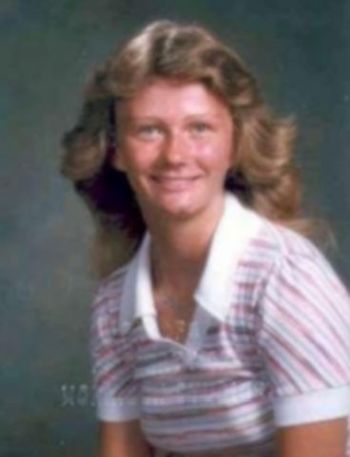
Forty one years ago, on September 27, 1977, 17-year old Louise Betts was dropped off near a shopping mall by her mother, Nancy.  No one would ever see Louise alive again.  When Louise didn’t come home, her parents called the police to report her missing.  They could have no idea that the odyssey that began that day would continue for the rest of their lives. 

The authorities filed a missing person report and followed up with a few of Louise many friends.  Louise was a popular senior at Harlem High School that year.   But at this time in our city’s past, 100 to 150 people were reported every month.  Most of these missing people were found alive and safe.  The police received reports that Louise was spotted at a local party and even seen in Texas were her grand-parents lived.

Sadly, those sightings were incorrect. 

Art Hyland was 62 years old in 1978 and he owned a farm not far from the intersection of Spring Brook and Paulson Roads.  Hyland was stunned when he discovered a skeleton in his field on March 30, 1978.   Newspaper articles form the day of the discovery quoted Hyland.  “After I saw something yellow in the field, I investigated and found the body.  It really shook me up.”  Hyland went on to say that Louise’s body had probably been covered up by snow.

When the police were summoned to Hyland’s property they found a bundle of clothing with identification inside.   The long search for Louise had come to an end.

Though Louise’s body had been found in Boone County, the Rockford police department quickly became involved.  Within a few days, they had a suspect for Louise’s murder in custody.  He was Curtis J. Brownell, a 23-year-old who was married and the father of two children.  An anonymous tip had led authorities to Brownell.  Brownell was also wanted for the kidnap and rape of a pregnant woman that occurred on January 31, 1978.  This crime had taken place only a half a mile from where Louise’s body was located. 

The victim from that crime reported that she was at a laundry mat in the Rural Street Shopping center when Brownell entered.  He was there a few minutes before he approached her.  He hit her in the head with a pistol, forced her into his vehicle and headed to Paulson Road.  After assaulting the woman, Brownell pushed her out of the car.   The woman was helpless as Brownell then ran over the lower half of her body.  Miraculously, the snow cushioned the young woman’s body and she was able to flee toward safety at a nearby house.

Brownell later confessed to both crimes.  When speaking of the crime against Louise, Brownell said that he thought she might still alive when he left her lying in that field.  The feeling grew when nothing was reported.  Brownell stated that he was terrified at first but when the body wasn’t found, he began to think he might have gotten away with it.  He told authorities he had even driven out to the location with his young daughter in the car to check the area.

When the Louise was found, he knew that it was all over.  He confessed to his reverend and then his wife. 

During his trial, other victims came forward and it became all too clear that Brownell had all the makings of what we would now call a serial rapist and killer.

Curtis Brownell was found guilty of the murder of Louise Betts in a Boone County Courthouse on September 14, 1978.   One psychiatrist that testified stated that Curtis J. Brownell “could not identify with the human race.”

Brownell was sentenced to die in the electric chair on October 9, 1978. 

But that’s not what happened.  Brownell’s attorneys appealed and he was eventually sentenced   to 200 to 600 years in prison.   Now, because of the way the laws worked back then, Brownell is eligible for parole.  He has been up for parole 14 times at this point.  Every one of those times, the survivors, the prosecutors and the remaining family members of Louise have attended the parole hearings. 

Louise’s parents are both gone now, but her siblings have taken over their parent’s mission to keep Brownell locked away.  They have been able to keep the case in the public’s eye for all these years.  But it does take a toll. They have shared that it is like opening a wound and losing Louise all over again.

The family can’t do it alone and they are very grateful to the Winnebago and Boone County State’s Attorneys who have gone with them to these hearings.

This week on February 13, Curtis J. Brownell will appeal to the parole board for the 15th time.  Winnebago County State’s Attorney, Marilyn Hite Ross and Boone County State’s Attorney Tricia Smith plan to attend this year’s hearing and ask that people in both counties sign the petition to deny that parole.  There is some concern that because he has served over 40 years of his sentenced, that he will be released.

Gary Betts, Louise brother was quoted in a recent article.  ” It’s one thing to know the family is passionate, but to see the community involved also makes a profound statement to (parole board members),”  .

Rockford has come through already with over 6,000 people signing the online petition.  But there is still time to add to that number. 

You can find links by googling Brownell’s name or visit the following: https://www.change.org/p/illinois-prisoner-review-board-oppose-the-parole-of-inmate-curtis-brownell-convicted-of-murder-and-attempt-murder


Copyright © 2019 Kathi Kresol, Haunted Rockford Events

Crime Stoppers Of Rockford

Originally published in The Rock River Times.

Ethel Safford2

Looking back on the history of Crime Stoppers of Rockford

It has been almost forty years since the Rockford Area Crime Stoppers was formed in 1981.  Former Police Chief Delbert Peterson began to develop the program in March of 1980.  Though the stories vary on how Peterson learned of the program, he was intrigued by the thought of a program that united the police department, the local media and the community in order to fight crime.  Rockford was the second city in the nation to adopt the program and it was quickly considered to one of the best of its kind.  The Police Department rolled out the new program on January 1, 1981.

The program’s first coordinator was Charlie Jackson who was a Rockford and Winnebago County Officer.  He was interviewed for a newspaper article to celebrate the twentieth anniversary of the program.  Jackson told of the first case solved in December of 1980, before the program even officially launched.  The tip was for a man who had murdered someone in Virginia during 1979.  That man, Robert Lee Word had fled Virginia and settled here in Rockford.  Jackson turned the information in to the FBI and Word was arrested immediately.

Another crime that was solved with help from Crime Stoppers was the horrendous murder of Ethel Safford.  Ethel had married into the well-known family of the Safford’s on December 2, 1925 when she became Mrs. Clyde Safford.  The family is remembered today with a road named for it on the west side.  The couple bought a two-story wooden house at 1511School Street shortly after their wedding.  Clyde worked as a carpenter and Ethel worked at the D.J. Stewart Store in downtown Rockford.  They would live in the home on School Street for the rest of their lives.  Clyde and Ethel were members of the Second Congregational Church in downtown Rockford and it was that church that brought her comfort when she became a widow in June of 1967.  Though the neighborhood had begun to change, Ethel continued to live in the home right up to her 90th birthday.

Her neighbors watched over the elderly woman who by 1983 was nearly deaf and blind.  Ethel referred to herself as the “Old lady on School Street”.  Later, her friends and neighbors would remember her for her wonderful sense of humor and for her kindness toward everyone.  Ethel was described as never having met a stranger and folks spoke of her generosity and general belief in the goodness of people.

In the early hours of New Year’s Day, two men broke into Ethel’s house.  Authorities were called to Ethel’s home by her neighbor Alderman Melvin Anderson.  Anderson had stopped in to check on Ethel and was horrified to find her face down in the dining room of her home.  The elderly woman had been savagely beaten and had a tablecloth tied around her neck.  It seemed a miracle that she was still alive.  Unfortunately, nothing could be done for Ethel and she lingered for five days before succumbing to her injuries.

The neighbor who found her, Alderman Anderson was also the one who contacted Crime Stoppers and started to raise a reward to offer for tips leading to the arrest of Ethel’s killers.  Anderson spoke of one man who came to donate his last $5.00.  The man told Anderson he had been out of work for the past four months but that the news of Ethel’s murder touched him and he felt compelled to help.  Anderson took the money and assured the man that every bit would help bring Ethel’s killers to justice.

Those donations would later lead to the arrest of 26 year old, Ivory Smith and his step brother, Charles Kidd.  Smith lived on Hinkley Avenue, just a couple of blocks from Ethel.  Authorities received Smith’s name in one of the anonymous tips.  Both men were arrested just a couple of days after Ethel died.  Ivory Smith would later be convicted and sentenced to 60 years in prison while Charles Kidd was sentenced to life.  Police stated later that without Crime Stoppers, Ethel’s murder might not have been solved.  That was also said about another murder that took place on October 24, 1984 in the 400 block of Island Avenue.  This incident, which was at the time called the most violent incident locally since the Simon Peter Nelson murders, horrified the entire community.

The Winnebago County Coroner at the time was John Seward and he would state that a strange sense of déjà vu overcame him as he first stepped into the scene of the crime.  This feeling was no doubt brought about by the bodies of Betty Moore, 29 and her 8-year-old son, Jesse.  Two more victims were stabbed but would live to testify about the terrible events that brought about the attacks.  Peggy was a friend of the family and had spent the evening with Betty and her three children before falling asleep.  She was awakened by someone pounding on the door at around 10:30 p.m..   Though Peggy was uncertain whether Betty had let the man inside or not, she was able to give the agonizing details of what had taken place.  The man began yelling for money and drugs and when Betty didn’t answer him, the man began to stab her.  He attacked Peggy next, stabbing and slashing at her before she broke away and ran out of the door.  Peggy ran a couple of blocks to her sister’s house and they phoned the police.  The man next attacked 8-year-old Jesse who police suspected tried to protect his mother from a further attack.  The coroner reported that Jesse had defensive wounds on his hands and arms.  The man also slashed at Jesse’s 9-year-old sister before she escaped and hid under a bed.  He left after stabbing both Jesse and Betty five times in the chest.

Everyone in the community was stunned by the senseless crime.  Jesse attended school at King Elementary and his fellow classmates and teachers were hit particularly hard with the news of the little boy’s murder.  Children were frightened and confused by the murder of someone their own age.  No one felt safe.

Hundreds of tips flooded the police department and one of these would lead to a quick arrest.  Richard Kilpatrick was arrested five days after the killings.  He showed no remorse for his actions even as the judge sentenced him to life with no parole.

These are just two of the crimes that would not have been solved without the help of Crime Stoppers.  The program has won many awards and continues to help solve some of the worst cases in our county.  I was contacted by one of the men who founded this organization so many years ago.  In our interview it was obvious that though he was not involved in the Police or Sheriff’s Department and called himself “just a businessman” that he carried great pride for the assistance that he and others like him were able to offer our community.  He asked me not to use his name but stated that he believed that Crime Stoppers made a difference when it was implemented and he believed that even today if more people would understand that they could remain completely anonymous and just come forward, we could make Rockford a better place to live.  He emphasized that is what he valued most about Crime Stoppers, “Everyone can make a difference in making Rockford a safer place to live.”

The Crime Stoppers has a website that is filled with information about unsolved crimes and how members of the community can help.  Please visit http://www.rockfordcrimestoppers.com/ for more information.


Copyright © 2019 Kathi Kresol, Haunted Rockford Events

One Of many, The Boomer Family, A History Of Military Service

Originally published in The Rock River Times.

Edward Boomer was only 13 years old when the Civil War started.  He tried to convince his parents, John and Margaret, that he was old enough to go fight in this war, but they asked him to wait.  Edward did as they asked until 1863 when he finally was able to convince them to let him enlist.  Edward Boomer was hired as a mule team driver but soon picked up a rifle to help defend his country.  During the winter months of 1863-64 he was a guard stationed in Nashville.

By the spring of 1864, Edward had fought in his first skirmishes.  War matures a man quickly they say and though a mere boy when he joined by January of 1865, Edward was a seasoned soldier.  During that month while fighting with the Wisconsin 13th  Infantry, Edward was captured at Paint Rock, Alabama.  He was escorted to one of the prison camp at Cahabe, Alabama.  Luckily for Edward, it had the lowest mortality rate of all the Confederate Prisons.  It still contained disease, little food and inadequate shelter. In fact, the old cotton warehouse had been converted to house 500 prisoners. By the time Edward arrived at the camp, the prison population was around 3,000 men.

Edward would spend the rest of the war in the horrible conditions at the prison.  He was captured in with 35 men from his regiment. Only 8 of the men survived their imprisonment.

On his way back to Rockford, Edward was spared from death again when he was chosen to ride with other men on the steam ship “Henry Ames”.  It was traveling up the Mississippi River with another ship, the Sultana. The Sultana sank from a mysterious explosion, killing 1,950 soldiers on board.

Edward always felt himself blessed for making it through the war when so many of his fellow soldiers did not.  He slowly regained his health and returned to the family’s farm business.  In 1870, he met a beautiful young lady Celinda Weatherhead whose family lived in the nearby town of Harrison.  They were married for 52 years when Celinda passed away April 1922 and Edward buried his beloved wife in the little North Burritt Cemetery.

Edward suffered with a weak heart and his health declined after Celinda’s death.  But he did not let that slow him down.  In December, one of his favorite musicians came to Rockford and Edward decided he would join his family to hear the Scottish singer, Sir Harry Lauder at the Shrine Temple.  His daughter and son in law attended the concert as well as Edward’s son Jay.  Edward was singing along with Sir Lauder and had just finished a lively tune when he closed his eyes and bent his head.  His daughter thought he had tired himself out and needed a rest.  But in reality, Edward passed away just as his favorite song came to an end.  Edward’s funeral was held at the Veterans Memorial Hall in Rockford and he joined Celinda in the little cemetery near their home.

Edward and Celinda passed on many things to their large family.  Both were considered to be hard-working, very generous and extremely proud of their community.  They also were very patriotic and dedicated to their community. Their son, Stanley would serve in the World War I and their grandson, John L. Boomer would fight in World War II.

John L. (referred to as Lynn by his friends and family) was born in 1919 and had very few memories of his grandparents.  He was one of five children born to Stanley and Bessie.  Lynn worked as a truck driver and traveled all over the country for his job.  No one who knew Lynn was surprised when the call went out for men to fight in World War II and Lynn decided to enlist right away.

He joined the 91st Bombardment Squadron and was sent to Mississippi to train to be a waste gunner inside a B-17.  The 91st Bomb Group was made famous by the movie “Memphis Belle”.  It suffered the greatest number of casualties of any bomber group that fought in the war.

Stanley and Bessie were very proud of their son for doing his duty but they also must have been frightened when Lynn was sent to Europe.   The 8th Air Force was based at RAF Bassingbourn and would fly an amazing 340 bombing missions during the war.  In October 1942, the unit was scheduled for a very important mission.  The ten plane formation was assigned to bomb the German U-boat base in St. Nazaire, France.

The mission began well but soon was under fire by German Focke-Wulf 190 aircraft.  These single engine aircraft were considered the best fighters in the air during the entire war.  They were also considered lethal by our forces. A s Lynn’s squadron struggled to reach their target, they took heavy fire from the German planes.  The fighting grew more intense as they neared the targets.

Lynn’s plane was hit several times and the pilot made the difficult decision to turn back toward the sea.  Three other planes made the same decision and flew in formation with Lynn’s plane.  The plane had sustained too much damage and soon lost an engine.  The plane could no longer keep up with the others, and the pilot signaled for them to continue without them.  The men in the other planes signaled back and continued on, knowing that they would never see the men again.

Though no sign of Lynn’s plane was ever found, it was theorized that the crew would have been forced to land at sea around thirty miles northwest of St. Nazaire.  None of the crew survived the crash.

Stanley and Bessie received word of Lynn’s death on November 28, 1942.  The government told them that Sergeant Lynn Boomer had been killed in action over France on October 23, 1942.  Lynn Boomer was the first casualty of World War II to come from Durand.  Unfortunately, he would not be the last.

The Boomer Family is just one of the many families in our community who has answered the call during war time.  It is also only one of many families to lose a loved one during battle.  These men and women who were laid to rest in small cemeteries scattered all through our county must not be forgotten.  Take the time this week to thank a veteran who has served in our armed forces by attending a service or visiting a cemetery to honor the legacy of families like the Boomers.


Copyright © 2018 Kathi Kresol, Haunted Rockford Events
The Hauntings Of The Wagon Wheel Resort

Originally published in The Rock River Times.

In its heyday, the Wagon Wheel Resort was considered the premiere place to visit in this area.  The creator of this legendary place was Walt Williamson.   Walt started his quest in 1936 with a small loan and a desire to open a truck stop and root beer stand.  After that business burned in 1941, he moved his operations to Rockford.  He stayed there until 1946, when he shifted his sights once again to the Rockton area.  Walt used recycled products to build.  He used telephone poles, hardware left overs, and what he lovingly called “junk” to rebuild.  He kept improving the property into a one-of-a-kind showplace.  It boasted of its own bowling alley, two ice skating rinks, swimming pool, candy shop and air strip.  The resort stretched over 300 acres at its peak.

The clientele included movie stars, performers and sports stars. Bob Hope and Ronald Reagan were guests.   Local girl turned actress, Barbara Hale held her wedding at the Old Stone Church in 1946 and a brunch reception at the lodge. 

Walt continued working on his place until the day he died in 1975.  But long before his death, folks started speaking of strange things happening in the area of the resort.  There were stories told of the rooms at the lodge having cold spots, lights flickering and shadows seen wandering its halls and grounds.  After Walt passed away and the former grandeur started to fade, the stories and rumors grew.

Websites mention that there was a bell hop who committed suicide in the building but as often is the case with these legends, research failed to find the bell hop mentioned.  However, the stories that were found prove to be stranger than any fictional one.

One story told of a horrible car accident which occurred on the curve around the resort.  In fact, this curve was so deadly it earned the name “Death Curve.”  The worst accident happened on March 20, 1950 when a car filled with eight people slammed into a petroleum truck.  All eight victims died.  Robert Rinehart, 37 years old, his wife, Patricia, 20 and their 16-month old daughter, Mary Mae died instantly.  There were five other passengers in the car including Robert’s brother, Raymond.   Twenty-one-year-old Betty Miller also had her 19-month old baby David along.  They lived through the initial impact but died on the way to the hospital.  The group was on the way to dinner in Beloit when they accident happened.

Willis Irvin Spring, twenty seven, was the driver of the petroleum truck.  He stated that the car the Rinehart group was riding in swerved over into his lane and he had no time to avoid striking them.   According to the article written about the accident, this was one of several at that location.  The coroner was quoted saying that over 25 people had been killed there in the twenty years prior to this accident.  Some people believe that might be one of the reasons that this particular area is so haunted. 

There are certain conditions that seem to amplify paranormal activity in a particular area.  One is running water.  Two rivers, the Pecatonica and the Rock converge a short distance away from the location where the Wagon Wheel once stood.  There is also evidence of Native Americans that once settled there.  That too, increases the chance for activity.  All of these plus an event that causes tragic deaths seems to leave an imprint of the location.

Another story from the Wagon Wheel happened on March 1 of 1979. Twenty three year old Jesus Lopez worked as a maintenance man at the resort on the overnight shift.   He was due to get off around 5:00 a.m.  When his replacement arrived, he could not locate Jesus.  When the man began to search for Jesus, he had no idea the horrible scene that awaited him.  He finally found Jesus on the kitchen floor, surrounded by blood.  It was initially called a suicide but after an intensive investigation it was classified as a freak accident.  Though it was almost impossible to imagine how such a thing could happen, Jesus had somehow stumbled and fell.  According to the Winnebago County Sheriff’s Department, Jesus had fallen into the band saw that was used to cut meat.  He died from loss of blood from the injury to his neck.

Of course, no one can say with any certainty that these incidents mentioned have anything to do with the ghostly encounters people have experienced in this area.  Some have shared their stories of hearing music coming from the area where the lodge once stood.  Music, they say, that is a reminder of the grand parties that used to be held there.  Others claim to hear the sounds of drumming left over from the days that Native Americans lived on the property.  And some say that shadows wander the grounds where movie stars once stayed.  Whether you believe in ghosts or not, most people that visit the old grounds share a sense of sadness at the loss of such a grand place.


Copyright © 2018 Kathi Kresol, Haunted Rockford Events

The Girl Who Fell From The Sky

Originally published in The Rock River Times.

Rhoda1

The Frederickson family was very excited on that August morning in 1928.  Arthur and Edith were the parents of three children; Roland 15 years old, Rhoda, 13 years old and Reynold who was 11 at the time.  The whole family had been invited by Edith’s brothers, Arthur and Carl A. Sall to the join them for a special day. 

Carl Alfred, or Al as the family called him, was 35 in 1928.  He had been interested in aviation his entire life.  He worked as a pattern designer at his family business, the Sall Brothers Company.  The business was very successful and this allowed Al to pursue his passion for flying.  He took classes in Chicago and spent time flying at the Machesney Airport with Fred Machesney himself.  Al just passed his private pilot license shortly before that sunny day in August and that allowed him to take passengers up for the first time.

Al invited his brother Arthur who was 34 and his sister Edith’s family to join him for a flight in the biplane he had just purchased.  The whole family met the brothers at the Machesney Airport.  Edith was very pregnant with her fourth child and would not be flying with her brother on that day.  Her husband, Arthur decided to stay with her.  The plans were that just the children would be flying that day.  No one had any premonition of the tragedy that was about to take place.

The plane could only hold 4 passengers at a time so Roland and Reynold were chosen to go first.  All went well as they flew around for about fifteen minutes.  The boys were excited and thrilled about the flight and rushed off the plane to tell their parents.  In fact, Reynold was jumping up and down and wanted to go back up with his sister.   His parents calmed him as Rhoda made her way to the plane for her trip.

The flight went well and Al was circling back toward the airport when disaster struck.  They were flying over an oat field on the west bank of the Rock River near Latham Park.  Their altitude was about 1,000 feet when the plane stalled and began a flat spin.  Though Al had handled this type of emergency in previous flights, for some reason on this day, he could not pull the plane out of the spin.

In a quirk of fate, Fred Machesney was at his airport and witnessed the crash.  He jumped into one of his small planes as soon as he saw that Al was in trouble.  Unfortunately, there was nothing that could be done to stop the crash from happening.  The small plane smashed into the ground at a horrible speed. 

One does not even want to imagine what Rhoda’s family was experiencing as they watched the plane crash into the earth.

There were many witnesses to the crash and they all rushed to the scene.  In fact, there were so many people that Machesney couldn’t land his plane safely at the location. He circled the scene and then headed back to the airport to land.  He would return in his truck within a short time.

The men that arrived quickly were met by a horrific sight.  The plane was completely smashed.  Arthur was still strapped in his seat.  He was lifted gently out of the cabin and laid on the ground.  The damage to the young man was obvious and he died before emergency help arrived. 

Al had managed to crawl from the wreckage and Machesney saw him waving as he flew over the scene.  By the time others arrived, he was unconscious.  He was rushed to the hospital.  Unfortunately, Al would die from his injuries a day later.

Both men suffered from massive damage.  Their arms and legs were crushed and they both had extreme internal injuries. Arthur had also suffered skull fractures. 

Rescuers were thrilled and shocked to find little Rhoda alive.  They removed her gently from the plane and rushed her to St. Anthony Hospital.  The doctors said it was a miracle the teen was still alive.  She had many broken bones including both arms and legs.  Rhoda would undergo a ground breaking surgery for that time as doctors tried to save her life. Her father donated blood for the little girl. 

The doctors were not optimistic about Rhoda’s chance for survival and they prepared the family that if she did live there was a good chance that she would be paralyzed for the rest of her life.  The damage to her body was just too extensive. 

Rhoda’s mother, Edith was so overwhelmed by the loss of her beloved brothers and the possible loss of her daughter that she went into labor early.  She gave birth to a little girl on August 29.  The family waited until Rhoda was stable before asking her to choose the name for the baby.  She decided that Ruth Joanne was a fine name for her sister.

Rhoda’s crushed body took a while to heal.  Heer arms and legs were suspended from cables and she couldn’t move.  The nurses hung books from the cables so that Rhoda could keep her mind busy with reading.  They were very impressed with the little girl’s bravery and her cheery disposition.  Though they knew the pain she was suffering had to be incredible, they stated that she never complained.  Rhoda always did what they needed her to do.  The nurses also knew that the little girl was terribly lonely.  Her mother and new little sister were in the same hospital but at night the nurses would hear Rhoda crying softly. 

They worked with the family and were able to surprise Rhoda with a party for her 14th birthday right in her hospital room.  Many of her school friends came to spend some time with Rhoda for her special day.

Rhoda was finally able to leave the hospital after 74 long days on October 31, 1928.   Her homecoming was bitter sweet for the little family.  Her recovery was truly a miracle but they also suffered from the death of their family members.  Even though Rhoda made a full recovery and would go on to live a remarkable life, her parents always carried a burden of guilt for allowing their children to go up in that plane. It was a something that would haunt them for the rest of their lives.


Copyright © 2018 Kathi Kresol, Haunted Rockford Events

Rockford Brave – Clayton Ingersoll

Originally published in The Rock River Times.

Clayton

People who knew Clayton lngersoll, or Casey as his friends called him, would describe him as solid and dependable.  They also said that Clayton was very patriotic and felt the need to defend his country when the time came.

Many more people knew of Clayton than actually knew him.  His father was Winthrop Ingersoll, founder of Ingersoll Milling Machine Company and the family was well known in Rockford.  Winthrop and his wife Harriet came to Rockford from Cleveland Ohio in 1891.  Winthrop was a mechanical engineer who had already owned a milling machine company in Ohio.  He saw an opportunity for growth for his company here in Rockford.

Clayton was born in Rockford on May 5, 1896.  He was educated here until he left for Lake Forest Academy in his junior year of High School.  He was enrolled in Cornell College when he decided to leave college to answer the call of duty.  Clayton secured an appointment to the Fort Sheridan Camp for Officers.  He later transferred into an aviation unit.  He learned to fly in Toronto Canada before joining the British Royal Flying Squadron.  Clayton sailed oversees to France in early 1918 after receiving his first lieutenant’s commission.

His family traveled to New York to see Clayton right before he left for France.  They celebrated Clayton’s commission to lieutenant as well as his engagement to Katherine Nelson.  She was the daughter of Frithiof F. Nelson, another well- known Rockford businessman.  The families lived in the same neighbor of National Avenue and were said to be excited about the joining of their families.

The marriage would never take place, however.  On April 26, 1918 Clayton was taking part in a pilot training session in France.  He had accomplished the flight and was descending for his landing when tragedy struck.  He was around 300 feet above the ground when his plane took a nosedive straight down.  There wasn’t enough time to pull the plane from the spiral and it crashed nose first into the ground. 

The Ingersoll’s learned of the death of their son in a telegram.  Devastated by the news, the family asked that Clayton’s body be sent home to Rockford.  They were denied that because of the war and he was buried in a special cemetery in Issoudon, France.  Some of Clayton’s friends that were overseas with him were allowed to attend the service.  They wrote to the Ingersoll’s and told of the “impressive, full military service” that was held in Clayton’s honor. 

Clayton received a Gold Star in a special ceremony held at the Second Congregational Church on September 22, 1918.  Many spoke of Clayton’s good character and his willingness to serve his country even though he knew of the great risk involved. 

ingersol2

Winthrop and Harriet decided to honor their son’s memory by donating a large sum to the Rockford Park District.  The same day that the donations was announced, the Ingersoll’s learned that Clayton’s body had been returned to the United States.

Clayton Ingersoll was finally laid to rest in Greenwood Cemetery on November 20, 1918.  It was a private ceremony for family and friends.  The pall bearers were all former aviators.  They met the train and along with a memorial firing squad unit from the Walter R. Craig  American Legion escorted Clayton’s casket to his home and then to Greenwood Cemetery.

Clayton’s parents wanted to honor their son’s memory and because of his family’s position in our community, they chose a way that would benefit Rockford for years to come.  His parents donated over $55,000 to Rockford to build a golf course and park on the west side of Rockford and named it after Clayton.  It would become a lasting legacy. Though some may not know exactly who Ingersoll Golf Course was named after, one only has to step inside the club house and see Clayton’s picture hanging on the wall to know. 

Clayton has been gone for over one hundred years now but the legacy built for our city by those who loved him still continues. 


Copyright © 2018 Kathi Kresol, Haunted Rockford Events

The Summer Of Fear

Originally published in The Rock River Times.

The summer of 1971 was a violent one in Rockford’s history.  It would later be labeled  “The Summer of Fear” by the local newspapers. By summer’s end, there were ten homicides in Rockford, the most for that early in the year in over a decade.  This statistic was made even more chilling by the fact that three of those murders were unsolved during the time and two of them remain that way today.

What made some of these crimes so hard to solve was the fact that they appeared to be completely random acts.  This meant that no one was safe and that fact terrorized the city.  The other staggering fact was that five of them happened within six weeks.

In a news article dated August 22, 1971, the Morning Star described the police’s frustration and the community’s fear.  The random attacks began with the killing of William Shoemaker on July 8, 1971.  The murders that came before were horrifying but a little less frightening because they were committed by people who had a connection to the victims. The random killings that came that summer terrified and ultimately changed this community.

 William Shoemaker was a 44 year old retired Marine.  He was hired as a caretaker and guard at the First Presbyterian Church on North Main Street.  There had been a string of burglaries in churches that year and Shoemaker was hired to watch over the place.  He lived in a small apartment in the building so the arrangement worked for everyone. 

Until July 8, when the church housekeeper found Shoemaker’s beaten and bloodied body. According to the Coroner Collin Sundberg, Shoemaker had been beaten and then strangled with his own belt.  The motive was thought to be a burglary gone bad.  The crime went unsolved until two brothers, James and Charles Pritchett were arrested and convicted of the crime.

The second and third murders of that summer came on July 25th when the bodies of Herman and Mary Kasch were discovered by their neighbor.  Mrs. Herman knew that both Mary and Herman were in their eighties.  She grew concerned when the Kasch’s son called her and asked her to check on the couple.  Mrs. Herman called the police when she found the front door standing open and broken glass on the porch.

Police entered the home and were shocked by what they found inside.  The elderly couple was  found dead.  The condition of the bodies told the police that the couple had struggled with their attackers.  Autopsies would later prove that Herman had been stabbed numerous times and Mary had endured severe blows to her head.  Her facial bones were fractured and there were also wounds to her arms and hands proving she had tried to defend herself.

The police were able to piece together a theory of what they believed happened.  They thought that someone had come into the house while the couple was watching television.  The attacker then ransacked the house looking for money and valuable items. 

While the police were questioning neighbors they learned that just two weeks prior to the murders a man had broken into the Kasch’s home.  A stranger had knocked on the door of the home and Mary answered. The man asked if she would like him to mow their lawn for a small fee.  She declined the offer and the man left.  But he returned a short time later and broke in the door.  He grabbed Mary and put a knife to her throat.  The couple pleaded with the intruder and finally were able to convince him that they had nothing of value to steal.  The couple was shaken by the attack and left to stay with a relative.  They had only been back in their home a few days when the murders occurred.

Neighbors and family members were baffled by the murders and could offer no clue to who might have wanted the couple dead.  Herman had worked as a farm hand all of his life and had lived his life simply.  Mary was Herman’s fourth wife when the couple married in 1962.  

The police questioned the Kasch’s neighbors and every one of them claimed that the elderly couple were kind and generous.  No one had a bad word to say about them and there were no rumors about hidden money or valuables that would attract a break in.  

Police extended their search several blocks and within a week, there was a break in the case.  A fourteen year old boy that lived a few blocks away from the Kaisch’s was arrested for the crime.  The entire community was shocked by the fact that someone so young could commit such a brutal act on the couple.  The teen was convicted of the murders and sentenced to 35-70 years in prison.

Unfortunately, two more murders quickly followed.  Roger Thompson’s body was found just a few blocks away from the Kasch home on the 500 block of Concord Avenue.  The nineteen year old’s bloody body was found by boys playing in an empty lot on August 3,1971.  Roger had been stabbed at least twelve times and his head was badly damaged.  

Roger had moved to Rockford from Los Angeles six weeks prior to his murder to live with his mother and step-father.  He was hoping to get a job at the Chrysler plant.  Roger was described as a “quiet boy, who didn’t get into any trouble.”

The last newspaper article that mentions Roger’s murder was in December of 1976 when Detective Captain Richard Anderson stated that the police “ knew who did it but we can’t prove it.”

That same article also mentioned the murder of Kimberly McMillan in Sunset Park on August 17, 1971.  While the other murders during the summer of 1971 put the community on alert; the murder of this little girl terrified everyone.  People started locking their doors and parent’s became stricter with their children.  The fact that this ten year old was at a supervised park surrounded by dozens of people when she was viciously stabbed in the back was beyond comprehension to everyone.  Another aspect that continues to frighten people today is that this murder was never solved.


Copyright © 2018 Kathi Kresol, Haunted Rockford Events


Twelve Mile Grove Cemetery

Originally published in The Rock River Times.

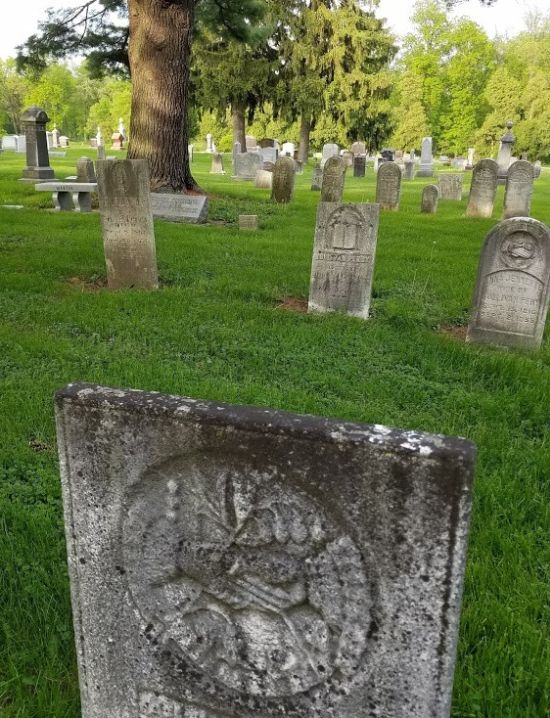
Twelve Mile Grove Cemetery

Cemeteries have attracted people for as long as they have existed.  Some are drawn to the place because they have a loved one that has been laid to rest there.  Others want to experience the beautiful statues and artwork left as a lasting legacy. 

But there is more to learn from tombs and graves than just names and dates.  Each of the stones represent a life whether cut short or lived to a ripe old age.  There is much to learn by looking closer into the lives of those who lie under the stones. 

This is certainly true of the historic Twelve Mile Grove Cemetery.  This small cemetery is located on Pecatonica Road close to Highway 20.

 The first settlement in this area (Seward Township) was called Vanceburg.  Scattered throughout the grove were log houses and the township consisted of a tavern, stage house, two stores and a blacksmith shop.  The town was built as a stopping place for the stage coaches that traveled from Rockford to Freeport and Galena. Twelve Mile Grove was so named because it was twelve miles from the ford in Rockford.

Newspaper accounts of the settling of the area state that in 1836 a weary band of pioneers was traveling by covered wagon through the area.  They were on their way out west when they wandered into a lovely spot in the grove by what is now Highway 20.  The leader of the group was Joseph Vance.  The settlement that sprang up would bear his name.

Ironically, Joseph would be the first buried in the little cemetery when he passed away on September 11, 1841.

One of the earliest stories of this little cemetery came from a collection of remembrances of old pioneers.   It tells of a tragedy suffered by the Merchant family that once lived in the grove.  It was a very hot night with and the father of the family was trying to get his little ones some relief.  So he moved them onto the floor where it was a little cooler.  The heat brought a fierce thunderstorm that included dangerous lightning.  The lightning struck the chimney, traveled down the stove pipe until it reached all of those sleeping on the floor.  Only the mother and the tiniest baby were left from the family of six.  The lightning was so treacherous, it even killed a basket of puppies that the family dog had delivered just days before.  The four family members were buried in a mass grave.

Then there is the strange story of the lovely Julianna Phelps.  Julianna was the daughter of Mr. J. Phelps who lived in the town of Seward.  She worked and lived in the Kelly home where she was the housekeeper.  On August 11, 1875, Julianna was visiting at the Ostrander home when she fell to the floor and had a seizure.  She was carried back to the Kelly home where she lingered for two hours before passing away.

The Phelps family was heartbroken and in shock that the very healthy twenty year old would die so suddenly. Her funeral and burial in the Twelve Grove Cemetery showed her family how much Julianna was loved and respected in the little community.  Many of their neighbors came to pay their respects for the fallen girl.

Mr. Kelly brought Julianna’s trunk full of her personal things back to her parent’s home a few days after the funeral. Her grief stricken mother decided to go through the items and found an envelope with the word Mother written on it.  At first Mrs. Phelps could not comprehend the words that were written on the letter inside. The newspapers ran the complete letter the next day.

                                              “Mother – I die because I am tired of living.  Kiss the children goodbye for me.
                                              I would like to see you once more, but no – I die tonight.  When you get this I shall be
                                              dead.  Goodbye forever – Julianna.”

When the awful truth dawned on Mrs. Phelps she and her husband shared their suspicions with the town doctor, Halsey S. Clark.  Together they made the painful decision to exhume Julianna’s body.  Her stomach was removed and sent to Rockford. 

The only way to prove that Julianna had taken poison in that day was to take a portion of her stomach contents and feed them to a stray cat.  The cat began to convulse and vomit much in the way that Julianna herself had. 

Julianna was reburied in the quiet little grove.  Though her manner of death was revealed to her family, Julianna took the reason for her suicide to her grave.

Cemeteries contain many such secrets.  Some stories were once well known but with the passage of time, have been forgotten.  The stones some broken and some with the words scrubbed away by wind and time.  But these people and their stories will never be forgotten.  There will always be curious visitors who will look beyond the stones to uncover their stories.

Perhaps local historian Charles A. Church said it best in his book, “History of Rockford and Winnebago County.” 

                                                “Love that survives the tomb has been called the purest kind of attribute
                                                to the soul.  This love finds expression in the monuments erected over the
                                                graves of the dead.  Our cemeteries have been made more beautiful by the
                                                cultivation of the artistic sense, and by a deeper realization of the truth that
                                                death is but the doorway.”


Copyright © 2018 Kathi Kresol, Haunted Rockford Events

The Mysterious Death Of Henry J. Lacks

Originally published in The Rock River Times.

There are many mysteries contained in the following story.  For instance, it is not known how long the body had been lying there before someone saw it on June 22, 1944.  People would later state that they had noticed the man stretched out on North Alpine Road as early as 7:00 a.m.  But no one reported it to police until 11:45 when Ed Belin finally called the body in. The others would claim they thought the man was drunk and sleeping it off beside the road.

Police did not even know if Ed was the only one to touch the body after it was dumped.  The coroner said that the condition of the body indicated that it had been moved at least once several hours after death.  The man’s body was lying face down in a ditch on the west side of Alpine road.  It was obvious to the first responders that the man was deceased.  He had a large hole in the side of his head and his clothes were soaked in blood.   His pockets had been turned out as if someone had gone through them looking for something.  When they turned the man over, they discovered an exit wound.

Though there was no wallet, the authorities did find a engraved pen and pencil set with the name Henry J. Lacks etched on the front.  They were grateful for a place to start their investigation.  It wasn’t long before they found a car registered to Henry J. Lacks on Crosby Street just a couple of blocks down from his parent’s house.

They also found Henry’s wife, Agnes.  Agnes was known to police because she had been married to Deputy Sheriff Sam Rotello before he was killed while on duty in 1936.  Agnes and Henry had been married since May 1939.  She had no idea how Henry had ended up dead in a ditch.  Agnes told them that Henry always wore a diamond and sapphire ring.  It was missing though his watch was still on him.   Agnes stated that Henry had feared for his life since early June, though she could offer no reason for this.

As their investigation continued the mysteries about Henry deepened.  Henry’s main job appeared to be as an insurance salesman, a job he worked for over 25 years.  He also worked at a war plant or at least he had until June 7 when he failed to show up for work.  He never even returned to collect his paycheck.  Henry also worked at the Nylint Tool Company and was an accomplished pianist.

The police initially arrested Henry’s wife, though it was mentioned that this was possibly done as a way to convince Agnes to talk.  It was obvious something had spooked Henry and they thought that maybe Agnes knew what it was. 

Agnes was reluctant to share their personal matters with the police.  The couple had a rather unorthodox marriage.  Henry spent most nights at his parent’s house on Crosby Street.  Agnes went out with other couples to parties.  That’s where she had been the night Henry was killed.  Henry told her he had appointments and wouldn’t be home until late.  Agnes assumed he was dining out with an insurance client. 

Agnes had Henry drop her off at a friend’s house where she stayed for a party.  After the party, friends took her out for coffee and she accepted a ride home from a woman that shared the couple’s apartment at around 4:00 a.m.  When they arrived at home, she saw a man who she assumed was her husband walk across the porch and enter a car that resembled Henry’s.  The man drove away and that was the last time she ever saw her husband.

Police didn’t think the man that Agnes saw was Henry.  They knew his car was parked on Crosby Street before 4:00 a.m.  The coroner put his death before that time as well. 

The police leaned on Agnes hard, giving her two polygraph tests.  They thought she knew more than she was telling them.  Agnes finally revealed that when she went into the apartment on the morning that Henry died, the place had been ransacked.  Obviously, someone was looking for something.  But she knew they didn’t find it.  Henry kept all of their important papers and jewelry in his safe deposit box at the bank.  

As police worked the case they developed several theories about Henry’s death. The first angle they developed focused on Henry’s home country.  Henry had been born in Germany in 1900 and moved to the United States in 1910.  According to his co-workers, Henry really admired Hitler and his regime.  This was a dangerous time to be spouting that philosophy.  In fact, one of the men that Henry met on the last day of his life was actually an undercover F.B.I. agent.  It seems the government wanted to know just how much Henry admired Hitler.  Police wondered if Henry’s willingness to spread his ideas about Hitler drew the wrong attention.

The other theory that the police worked dealt with the gambling that was prevalent in Rockford during this time.  Different gangs were running card games and even horse betting.  The police knew that Henry spent a lot of time in the night clubs. They questioned co-workers, the few friends that Henry had, and even family members about Henry’s gambling. They checked into his accounts, and using the tip from Agnes, they searched his safe deposit box.

Authorities were surprised to learn that Henry didn’t gamble at all.  In fact, it was Agnes that spent time at the poker tables.  She lost big and Henry scrambled to cover what she owed.  But Henry had finally had enough.  According to his family, Henry went to the gambling dens and threatened the owners that unless they stopped taking money from his wife, he would tell everything he knew to the police.  But Henry left no evidence of what he might have known.  He had cleaned out the safe deposit box and his bank account.  If he had any hard evidence to share with the police, it was never found. 

Henry J. Lack’s murder was never solved.  His family buried him in St. Mary’s Cemetery and by August 1944, Agnes left Rockford.  Stories put her in California but researched has failed to find her there.  The local newspapers compared Henry’s murder to the 1937 unsolved murder of bookie operator, Charles Kolb and ran articles on the anniversary until 1959 when those too stopped.

Gambling in Rockford was curbed because of Henry’s death, at least for a while. Slot machines were confiscated and poker games were stopped or at least better hidden.  But the investigators never found the solution they searched for and the mystery of who killed Henry J. Lacks was never solved.


Copyright © 2018 Kathi Kresol, Haunted Rockford Events

The Sins Of The Father

Originally published in The Rock River Times.

When that day was over, Frank Barris would claim that he was not in his right mind on June 20, 1933. That morning Frank spoke on the phone to a young woman named Anna Trenary.   The conversation did not go as Frank had hoped.  When Frank hung up the phone, it was the last thing he would claim to remember for hours.

Frank left work early and returned to his house.  He grabbed his handgun that he had purchased a month before.  Later, Frank would state that he brought the gun in order to use it on himself in front of Anna.  He stated,“She took away everything that was beautiful in my life.”

Frank journeyed to Anna’s small house at 1511 West State Street.  Anna was having lunch with her 15-year-old son and a boarder, Vernon Morgan.  She sat with her back to the door and was just raising a sandwich to her lips when Frank burst through the door.  He fired the .44 caliber gun at her.  The bullet tore through her arm and exited through her chest.  Anna was dead before she hit the floor.

Across town at Frank’s home another scene was taking place.  18-year-old Eddie Barris was very worried about his father.  Frank had been acting peculiar and speaking of Anna almost constantly.  Eddie knew his father had left work early that June day.  Eddie stopped at the house and his concerns grew when he realized that his father and his gun were missing.  Eddie was joined by his younger sister Lucille and they raced to Anna’s home.  Unfortunately, they arrived too late to stop the horrible scenario their father had put into motion.

When police arrived, Frank sobbed as he poured out the whole story to the bewildered men on the drive to headquarters. Frank told the police that he had been living a lie.  He confessed to the police that he had been having an affair with Anna Trenary for almost 18 months.  His wife, Sophie had no clue about her husband’s affair.  

The policemen tried to make sense of the convoluted story that came pouring out of Frank.  Anna Trenary worked as a nurse for a local physician.  Frank and Sophie’s daughter, Lucille needed at home care and Anna was assigned the job.  No one could foresee the far reaching consequences that the decision would bring. 

Anna was such a great nurse that it wasn’t long before the 16 year old Lucille was back on her feet.  Anna would often visit her former client to check on her progress even after Lucille was released from her care.  It was during these visits that Frank and Sophie got to know the young nurse.  They would often share dinner and a glass of wine.  It wasn’t long before Anna started to bring her son along for the visits and the families grew even closer. 

Frank became obsessed with the 36-year-old beauty.  Before long, he was dipping into the family’s savings to pay for gifts for Anna.  By June of 1933, Frank came to the end of his money and he could feel Anna slipping away.   Whether it was the fear that his family would find out about the affair, the money, or Anna’s rejection, something inside Frank snapped.

Frank was convicted of the murder of Anna Trenary and sentenced to life in prison at Joliet, Illinois.  He would die there while serving his time.  Sophie divorced Frank and the family moved on with their lives.

By 1942, Frank’s son Eddie was married with two young children of his own.  He had recently been promoted to manager for the A & P store on West State Street.  But the darkness that had reached out to claim his father was not finished yet.  Eddie was under tremendous pressure with the new job and he started to have a drink in the evening to relax. Before long, one drink turned into more until Eddie began to lose control.  This caused problems in his marriage and by August, Eddie’s wife Ellen decided to leave. 

On August 13, 1942, the couple was dividing the household goods.  Ellen’s sister and mother were helping her pack.  Eddie brought two men along to load the truck.  Eddie asked to speak to Ellen in the kitchen.  He wanted one more chance to fix things.  When she refused, Eddie had the same reaction as her father had years before.  He pulled a gun and began to fire at Ellen.  Ellen’s sister and mother came running to her rescue.  Eddie fired at them as well, striking them both.  

Thinking that he had killed all three women, Eddie ran from the apartment and into the street. It was there that Eddie shot himself in the abdomen.  Then he drew a knife from his pants and drove the 4 inch blade into his chest.  He collapsed on the street.

Police were able to quickly piece together the scene from the many people who witnessed the attack.  Ellen and her mother, Dora were on the brink of death.  It was considered a miracle that the couple’s two little children had not been hit by the bullets flying around.  

Eddie was very close to death.  He had missed his heart but had lost a lot of blood.  But against all odds, all three women and Eddie recovered.  Eddie was arrested for the assault but Ellen’s family showed concerned and forgiveness toward Eddie.  They agreed to a plea bargain to grant Eddie a light sentence.  He was convicted of a misdemeanor assault with a deadly weapon with intent to do great bodily harm.  Eddie was sentenced to one year at Vandalia Correctional Center. 

When Eddie finished serving his sentence, he joined the U. S. Army to serve in World War II.  He remarried and died at 41 years old in Madison, Wisconsin. One can only hope that the terrible legacy that Frank committed and Eddie attempted ended with them.


Copyright © 2018 Kathi Kresol, Haunted Rockford Events