
Lorenzo Gillogly: The First Rockford Police Office Slain In The Line Of Duty

Originally published in The Rock River Times.

Office Lorenzo Gillogly

This is the story of the very first Rockford police officer slain in the line of duty. His name is listed as Lorenzo Gillogly in the modern papers, but people back in 1917 knew him as “Jack.”

Jack had been a very dedicated officer for four years. He was a patrolman for the South Main beat. He was described as “pleasant, courteous, and obliging at all times.” He always had a big smile on his face, and was very popular with the men and women who worked in the stores and shops on his “beat.” His superiors were so impressed with him that they offered him a promotion to the plain-clothes division.

Jack was divorced and had two daughters — Nelma, 16 years old, and Lucille, 12 years old. They lived with their mother, Edna, and their grandmother in Freeport, Ill.

Jack’s life was going very well in the fall of 1917. He had just celebrated his 39th birthday, and he had fallen in love again. He and his fiancée, the daughter of D.W. Rogers, the engineer of the steam boat Illinois, had set the date for their wedding; it was to be in the spring of 1918.

Saturday, Oct. 13, 1917, Gillogly had finished his shift and, still in uniform, was walking on South Main Street toward the cottage where he was staying. It was 6:15 p.m. Jack was completely oblivious to the scenario that was playing out just a few streets away.

Earlier on that Saturday, Charles E. Jackson had arrived in Beloit, Wis., on the train from Moline, Ill. He had high hopes that his wife, Florence, would be there to greet him at the train station. He had sent a telegram to her mother’s house in Beloit, telling her of his plans to arrive that afternoon. Jackson stepped down from the train and looked for his wife. As time passed, Jackson realized Florence was not coming and there would be no reconciliation. In that one terrible moment, Jackson made his fateful decision.

Having learned that his wife was working and staying with her sister, Marion, whom Jackson blamed for all of the problems between himself and Florence, he the made his way to Rockford.

He went to the Kraft five-and-dime store, where Florence was working about 3 p.m. Florence refused his pleas to reconcile. Jackson left, but returned around the time Florence left work. He watched as she and her sister left the back entrance of the five-and-dime and hurried up the street. Jackson caught up with them and told Marion to leave them alone. She left as they turned the corner onto South Main Street.

Florence must have been relieved to see South Main Street was so busy. She saw her chance to get away from Jackson when she noticed Patrolman Jack Gillogly coming toward her, and she stepped in front of the officer. She was just about to tell him that she was with her estranged husband and that he had just threatened to kill her.

Florence never had the chance to speak. As soon as she stepped toward the officer, her husband pulled a weapon from his overcoat and fired. The shot missed Florence, but was so close that it went through her hat. Jackson fired two more shots in quick succession, both of them striking Gillogly in the upper chest. He fell to the ground. Florence fell over him and cradled his head, turning her back toward her husband. Jackson must have thought he had struck both the officer and his wife. He raised the gun to his own temple, and pulled the trigger.

When Florence saw him fall, she got up and walked away. Gillogly was transported to Rockford Hospital, where he later died.

The police had no clue about what had happened on that busy street until around 10 p.m. that night when they finally found Florence in the rooming house where she lived.

Gillogly didn’t know the man who shot him, nor did he know the reason why. But those who knew him back in 1917 said it wouldn’t have mattered; Jack would have still tried to help Florence — he always did what needed to be done.


Copyright © 2014 Kathi Kresol, Haunted Rockford Events

Dr. Josiah C. Goodhue And The Curse Of Big Thunder

Originally published in The Rock River Times.

WEB_goodhue

Northern Illinois was once inhabited by the Native American tribe known as the Potawatomi. The major chief for this area was Chief Big Thunder, supposedly named this for the sound of his thundering voice. Before he passed away, he requested to be placed facing the West. Big Thunder foretold of a great battle between his tribe and another. He told his people that when the time came for this battle, he would come back and lead them to victory. Big Thunder died sometime around 1800, and his people placed him on a bench on the highest spot around and surrounded his body with a fence. Though the battle he foresaw never happened, and Big Thunder never rose from the dead, his people continued to honor him by placing tobacco in his lap as an offering.

WEB_Big-Thunder

During the early 1800s, Big Thunder’s burial place was on the main stagecoach trail between Chicago and Galena, and his grave and body soon fell victim to relic hunters. These white men took the chief’s bones and placed them on display in their homes or businesses. The people of the area considered Big Thunder a tourist attraction of sorts, and when actual relics became scarce, started using pig bones instead of Big Thunder’s bones in their displays. Big Thunder’s skull was supposedly taken by Dr. Josiah Goodhue, and is rumored to have ended up in the Rush Medical College and then lost during the Great Chicago Fire of 1871.

Dr. Goodhue was well known in Rockford. Josiah was born in Putney, Vt., in 1803, and moved his family here from Chicago in 1838. He graduated from the Yale School of Medicine and then started a practice in St. Thomas in upper Canada. It was here that he met his wife Catherine Dunn. They had 13 children, five of whom died before reaching the age of 5 years old.

Dr. Josiah Goodhue had many achievements to his name by the time he reached Rockford; he was instrumental in organizing the Rush Medical College and served on the first board of trustees. He also designed the first city seal for Chicago.

The townspeople of Rockford claimed that Dr. Josiah Goodhue was “one of the most eccentric people that this town had ever known.” He is still remembered today for his work as a doctor and for changing the name of the city to “Rockford” from “Midway,” as it was previously known.

Unfortunately, Josiah is best known for his demise, which was said to be the result of a curse by Big Thunder’s tribe. The Potawatomis heard of the desecration of their beloved chief’s final resting place and swore revenge against anyone who had taken his bones, especially the man who had stolen his skull.

Dec. 31, 1847, Josiah, then just 44 years old, was attending to a patient at the house of Richard Styles about 4 miles west of the city on “State Road.” When he was finished treating his patient, he decided to walk a neighbor woman, Mrs. Stoughton, to her house. It was dark, and though he was warned by Mrs. Stoughton about the danger, Josiah fell head-first into a freshly dug well. He died shortly after his rescue.

The stories of the curse of Big Thunder escalated after Josiah’s death. Many insisted that Big Thunder had finally received his revenge. The City of Belvidere honored Chief Big Thunder by placing a rock with a plaque at his final resting place, in front of the courthouse.

One other thing that Josiah left the city of Rockford was the cemetery that he fondly named “Cedar Bend,” which later became “Cedar Bluff Cemetery.” He was buried there on the top of a small hill.


Copyright © 2014 Kathi Kresol, Haunted Rockford Events


December 1965 Holiday Skydiving Promotion Ends In Tragedy

Originally published in The Rock River Times.

60s_skydiving_500

The holiday season is always filled with excitement and anticipation. Stores of all types feature sales and gimmicks, always competing for the most eye-catching, dramatic way to entice shoppers inside. But sometimes these promotions do not work out as planned.

In December 1965, North Towne Shopping Center was hosting what they hoped would be a memorable holiday program. As families gathered to await Santa’s arrival, Santa and his “helper” would parachute down into the parking lot to the delight of those waiting.

The parachutists for that day were Bill Fleming, 29, starring in the role of Santa, and his “helper,” 40-year-old Cornelius “Connie” O’Rourke. They would jump from the plane at about 3,000 feet. To help make it easier for the watchers to spot the pair as they descended, O’Rourke had been equipped with smoke bombs on his legs. The pilot was 23-year-old Rick Friend.

O’Rourke was an experienced parachutist with a history of almost 1,000 jumps. He also was a parachute instructor and an operator of a parachute loft licensed by the Milwaukee FAA District. “Connie,” as his friends called him, had met the federal qualifications to repair and pack parachutes.

The festivities were supposed to start with O’Rourke, dressed as an elf, jumping first with the bombs smoking, and then Fleming, dressed as Santa, to follow.

According to his statement later, Fleming said that Connie jumped and deployed his parachute. It became tangled in the apparatus for the smoke bombs attached to his leg. Connie struggled to free the cord as he fell about 1,000 feet.

After he couldn’t free the first parachute, Connie deployed his emergency chute. Unfortunately, the emergency parachute became entangled in the cord from the first chute, and both of the chutes streamed uselessly above Connie as he fell.

Most of the people in the crowd were not aware of what was actually taking place right before their eyes. The announcer that day told them the first parachutist was actually a dummy. But there were some who knew the truth. Bill Fleming knew that Connie was in trouble, and he bravely jumped from the plane. Both Bill and Connie’s wives were in the crowd, no doubt horrified by the events unfolding.

O’Rourke fell at the speed of 100 miles per hour. Though nothing good can be said about these events, at least O’Rourke did not come down where it was originally intended, the middle of the parking lot. He landed in the back yard of Dr. C.B. McIntosh. Thankfully, the McIntosh family was not home that day.

Connie’s body hit an oak tree first, but that did little to slow his descent. His body left a 1-foot crater in the yard. Witnesses saw O’Rourke hit the ground and knew there was no hope for survival. Police came and took Connie’s body to Rockford Memorial Hospital to await the arrival of his wife and friends.

Bill Fleming’s jump was completed without injury, and he was rushed to the hospital to be with Connie’s wife.

Federal inspectors went over the parachute in an attempt to find the cause of the horrible accident. It was likely that O’Rourke had packed his own chute, and the inspectors found nothing to indicate there was any malfunction — a fact that no doubt brought little comfort to his family and friends. Connie was survived by his wife and two little girls.

A fictional version of this story authored by local historian and teacher Ernie Fuhr is included in the bookSecret Rockford, released earlier this year. Secret Rockford contains stories about Rockford written by a variety of authors and edited by Michael Kleen.


Copyright © 2014 Kathi Kresol, Haunted Rockford Events


Alexander Folz

Originally published in The Rock River Times.

Alexander-Folz

Alexander Folz was not from Rockford. In fact, he was not even from the United States. He was born Nov. 10, 1886, in a very oppressed part of Russia. He arrived in Rockford in 1914, and found employment with the Rockford Tool Company. Alexander was well liked and made a large number of friends among his co-workers.

Alexander married his wife, Anna, Aug. 13, 1917, and the couple settled in a little house at 1019 Rural St., Rockford.

Folz enlisted in the Army Feb. 9, 1918, and was sent to Camp Funston in Kansas. He sailed to France on the U.S.S. Berima in June 1918 with the 354 Infantry — 89thDivision. His wife expected him home in time for Christmas. Instead, she received one of those dreaded telegrams that so many wives and mothers received during World War I and World War II.

The first telegram just contained the sad news that Alexander was dead. A month later, the full details were released, and Mrs. Folz realized exactly how her husband died. He received his fatal wounds in a “daring and courageous act that saved many lives.”

Alexander’s unit was ordered to attack a “machine gun nest” near Remonville, France. During the attempt, they were pinned down under the fire from the machine gun. When Corporal Alexander saw that the automatic rifleman had been wounded, he bravely grabbed the weapon and began firing as he moved toward the location of the machine gun. He single-handedly took out the machine gunner. This saved the men in his unit, and allowed them to advance. They took the German survivors prisoner and also confiscated the gun. Unfortunately, it was during the advance that Alexander was mortally wounded. He would die just a few minutes after his successful attack.

The United States Army cited Alexander for bravery. This made him the third man to be recognized for bravery from Winnebago County during World War I. The newspapers of the day told of Alexander’s heroic act. They said that “he may have been born in Russia but he was American in spirit.” The United States issued Alexander the Distinguished Service Cross. A lot of men died during the advance, and there are many stories of courageous acts by the men of the 89th. President Woodrow Wilson commended them after this battle, saying: “Everybody at home is proud of you. You knew what was expected and you did it.”

Alexander Folz , like many women and men, both native born and immigrant, fought for the freedom of this country. Even though he was not born here, he did not hesitate to pick up that gun and run toward the entrenched enemy line in what he must have known was a suicidal advance.

WEB-GRAVE-Alexander-Folz

In a very tragic twist of fate, Alexander’s mother and four siblings, who remained in Volga, Russia, when he left, were supposed to get his back pay and war risk insurance. Gov. James B. Goodrich of Indiana was visiting the area in Russia on a famine relief mission. A woman clutching papers came up to his party. She explained through an interpreter that she had received the papers but could not read them. The interpreter read them to the lady, who turned out to be Alexander Folz’s mother, and Goodrich. The papers told the mother of Alexander’s death and his request that his family receive the $12,000 for the insurance and back pay. The governor promised to help the family get the money and worked on the arrangements when he got back to the United States. He feared that the Russian government would confiscate the money. So, Goodrich was arranging for the family to move to Nebraska to be with Mrs. Folz’s sister. Unfortunately, when he returned to Volga, he learned that the entire family had died of starvation. The last newspaper article mentioned that Goodrich was attempting to bring the remaining grandchildren to America. Goodrich succeeded in bringing corn to the starving area, and helped saved many lives. There is no further mention of Goodrich’s endeavor to bring the Folz family to America.


Copyright © 2014 Kathi Kresol, Haunted Rockford Events

A Haunted House In Rockford Center

Originally published in The Rock River Times.

HRPageRockfordMap1886_500x545

In an article from the Morning Star of Oct. 30, 1898, the paper mentions that true ghost stories are a novelty, and most ghostly claims can be explained by “natural causes.”

The article then goes on to tell of two stories that cannot be so easily explained away. The first story describes a haunting in one of the first houses “to be erected in the city.” Unfortunately, the story does not give the address, stating only that it is located in a “lonely corner by the fairgrounds.” An 1880s map places the fairgrounds at the end of Peach Street (modern-day Jefferson Street), a block west of Horsman Street on Kilburn Avenue. The house was “remote from the street and is surrounded by trees.”

There are no indications that anyone in the 1890s knew of any stories from the history of that house that would suggest that it was haunted. No one knew of any violent deaths or other reasons that it would be “inhabited by ghostly beings.”

But then, a new family moved into the house, and the mother was a sensible woman who was practical and not given over to flights of fancy. But when she moved into this house, everything changed. The woman found herself constantly anxious and would often stand at the window or the door as if she were expecting someone, but she didn’t know who. She had trouble eating and sleeping, and eventually wasted away to a mere “shadow of her former self.”

One moonlit night, she was waiting for her husband to come home when she heard his footsteps on the walk outside of the house. The footsteps continued up to the door, which she heard open and close, and then more footsteps as her husband came up the hall. The woman rose to meet him in the hallway, but when she stepped through the doorway, no one was visible. The wife shared her story with her husband when he finally did return. Fearing for his wife’s sanity, he moved his family from the house.

Not long afterward, another family moved in, and shortly afterward, moved right back out. This continued to happen until the stories spread and no one dared move in to the house in the woods. It was abandoned and fell into ruin.

The Morning Star article then told of another house on “one of the principal roads leading from the city” that is visited by spirits. This house had a cellar, and the writer of the article suggests it was in the cellar that the troubles started. The cellar was small, with only one entrance and two small vents in the stonework. The people who lived in the house would tell stories of an alarming, loud pounding on the cellar side of the door. But when they opened the door, there would be no one on the other side.

The spirit was not limited to that cellar, however. The phantom knocker also appeared to them in their upstairs bedrooms. Sometimes he would be just a faint outline, other times his features would be clear, and they would find him grinning at them from the side of their beds when they awoke. He caused no harm beyond scaring the family, and they actually became quite fond of the “practical joker” who shared their home. In fact, they stated they would miss him if he were to leave.

The author put this down to the fact they were “hard headed tillers of the soil.”

He also declared that there was no doubt a natural reason for these experiences, though no one had yet “solved the question of what makes the ghost walk.”


Copyright © 2014 Kathi Kresol, Haunted Rockford Events


Little Freddie Griffin And The Founding Of Rockford Memorial Hospital

Originally published in The Rock River Times.

Freddie Griffin
The display at Rockford Memorial Hospital

This is the story of little Freddie Griffin. Freddie was a very energetic 6-year-old who lived in downtown Rockford. Freddie’s family was poor, and they lived in a small house by the river. Mrs. Griffin supported herself and the six children by working as a washer woman for the Spafford family. She was at work the day this story took place.

It was around 3 p.m., Oct. 2, 1883. Freddie was playing not far from his front door with his little friend, George Pitney. That day, they were doing something both of their mothers had warned them never to do: they were playing around the railroad cars. George saw Freddie grab onto the door handle of one of the cars and swing his legs back and forth.

George shouted a warning, but it was too late. George saw Freddie’s hand slip. He said it happened so fast, but at the same time, it seemed to be in slow motion. Freddie fell onto the tracks right in front of a moving car.

George was horrified to see the wheels of the car pass over Freddie’s body, and soon, his own screams joined those of Freddie.

The paper went on to say the “bones of his leg were crushed by the heavy weight of the cars as if they were straws.” The boys’ screams drew the attention of a man who came to see what the source of the disturbance was. He swooped in and picked Freddie up and dashed off with him to Freddie’s house, where he found the door locked. He set the boy on the ground, and ran to summon a doctor.

The story goes on to describe Freddie’s injuries, the details of which are too sickening to repeat here. Suffice to say there was little left of the young boy’s legs and his left arm.

Doctors were finally found, the door was kicked in, and the doctors worked their horrific craft by the light of a small window. They used chloroform to help the young boy tolerate as they probed the mangled flesh. The decision was made that the only way they might be able to save young Freddie’s life would be to amputate. Several doctors “commenced their almost hopeless labors.” They amputated the limbs, leaving stubs about 6 inches long. The surgery was complete in just under an hour. The doctors were impressed with little Freddie’s bravery.

Mrs. Griffin was able to see her boy soon after the surgery was completed. The doctors warned her that the chances of Freddie making it through the evening were very slim. In fact, they were correct. Freddie passed away around 7 p.m. that evening.

The engineer of the train, Delos Mitchell, was questioned at the inquest the following morning and stated he didn’t know he hit a boy. The jury agreed, and found the death of Freddie Griffin accidental.

Freddie’s death was truly horrible, and one does not even want to try to imagine what his family went through, but something good did come from this tragedy. Physicians in the area decided to apply for a charter to open a hospital. They didn’t think it really would have changed the outcome for Freddie, but at least his mother wouldn’t have had to clean the little boy’s blood from the surgery from the floors and table of her home. Because of the doctor’s dedication, the hospital opened in October 1885.

Freddie is remembered with a very nice display at Rockford Memorial Hospital, and his story is also shared by the guides at the Midway Village Museum.


Copyright © 2014 Kathi Kresol, Haunted Rockford Events

One Of Rockford’s First Written Accounts Of A Ghostly Presence

Originally published in The Rock River Times.

elegance

People have always been fascinated by what happens after we die. Thousands of stories have been shared about personal encounters with the “other side.” Rockford newspapers have reported these experiences since the early 1890s.

One of the first written accounts of a personal encounter with a ghostly presence in Rockford occurred in 1891. It seems that rumors were spread about a mysterious, ghostly light that appeared in a downtown church on the corner of South Church and Chestnut streets.

Apparently, people would see this ghostly light making its way through the darkened church. They reported this to the police, thinking that someone had broken in to steal something. Police would check the place thoroughly, only to find no one inside.

This happened so frequently that one officer decided he would solve the mystery. Officer Cavanaugh was a seasoned policeman whose regular patrol area included this particular church. June 3, 1891, he decided the time had come to finally put these rumors to rest. Cavanaugh theorized that someone was playing tricks on the folks of Rockford, and he was going to prove it.

The officer patrolled the church every 15 minutes. Hours passed with no results. Officer Cavanaugh was just about to give up when he looked at the church from his vantage point and saw a small flickering light.

As Cavanaugh rushed to the front door of the church, he also heard the distinct sound of organ music playing. He let himself inside with the key he had obtained. He was able to see his way clearly by the glow of the strange light, but just as he reached the room where it was located, it went out. Suddenly, Cavanaugh was left in complete darkness. He used matches until he found the switch for the lights. Determined to prove his theory, the officer searched every nook and cranny in the entire building and found no trace of anyone.

Cavanaugh decided he needed some assistance and went to find the night policeman, Officer Sullivan. The men returned to the church, and once again, waited for the light to appear. Officer Cavanaugh took the front door and Officer Sullivan went to the back. Cavanaugh entered the church, and just like before, as soon as he gained access to the room where the light was shining, it went out. Better prepared, this time he carried a flashlight.

The music continued as Cavanaugh shone the flashlight beam around the room. When he directed the light toward the pulpit , Cavanaugh saw something “that almost made his blood freeze!”

In the dim light of the now shaking flashlight, Cavanaugh saw a young lady, dressed in what he described as mourning clothes, playing the organ. The brave officer stopped in his tracks. The young lady continued to play as she turned to look at him. As their eyes met, the music stopped, and the woman disappeared.

Cavanaugh, startled, called out to Sullivan to ask if he saw anyone. Sullivan answered that he had not. Cavanaugh turned toward the organ and again saw the young lady sitting on the stool. The sight chilled and saddened him at the same time.

Cavanaugh rushed to the front door to let Sullivan in, and as they entered the room, the music stopped. The young lady had disappeared.

The two officers searched the entire building and found no one inside and no clue of how the woman entered or left the building. They lingered to see if she would repeat her performance, but the woman did not return. Satisfied that they would learn no more, they left the building.

Officers Cavanaugh and Sullivan both claimed that although neither of them believed in spirits, they could find no other explanation for what they heard or saw.


Copyright © 2014 Kathi Kresol, Haunted Rockford Events
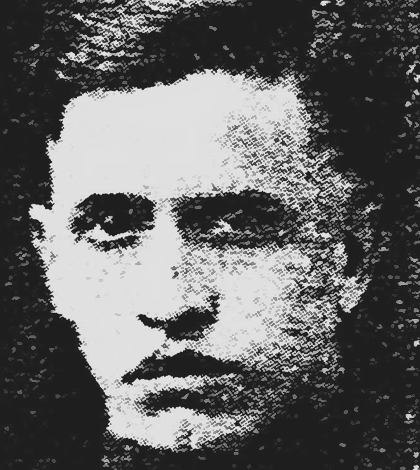
Alfred Countryman: The First Public Execution In Rockford

Originally published in The Rock River Times.

Gallowshangman

Rockford was a pretty wild place in 1856. The city was making advances in what would become the foundation for the manufacturing boom that was to put Rockford on the map. But in the early days, crime was very common. Robbery and cattle rustling were especially prevalent.

John F. Taylor was the sheriff in those days. He was from all accounts a very fair man. When he left for work on Nov. 11, 1856, he kissed his wife and 1-1/2-year-old son goodbye as usual, neither could know it would for the last time.

Sheriff Taylor was alerted to possible cattle thieves in the town when two brothers, Alfred and John Countryman, rode into town with a deal that seemed too good to be true. They were trying to sell a herd of cattle for a sum much lower than market value. The prospective buyers grew suspicious and alerted the sheriff.

At around 9 that morning, Sheriff Taylor arrested the brothers for the suspicion of theft. He carried through with the usual routine of searching the suspects and found pistol balls in Alfred’s pockets, but when he questioned the suspect, Alfred denied having a gun. The sheriff and one of the deputies started to walk toward the jail. Just as they reached the steps, Alfred broke away from the sheriff, leaped over a fence on Elm Street, and ran down the street with Sheriff Taylor in pursuit.

The sheriff caught up with Countryman and was about to grab him when Alfred pulled a gun and fired at the sheriff. Taylor staggered a few steps, gasped out, “I’m shot, catch him.” He then fell, mortally wounded.

Alfred Countryman continued to run and made it all the way to Kent Creek, before he was brought down by one of the many citizens who took up the chase when Taylor fell. Witnesses from that day would claim the pursuers numbered more than 100 men. There were rumors that a lynch mob had been calmed by the Sheriff Elect Samuel Church. He promised that justice would be swift.

Sheriff Taylor was respected in Rockford, and his funeral definitely reflected that. It was held on the public square under the charge of the Masonic Fraternity, of which Taylor was a member.

Alfred Countryman’s trial was held in February 1857. The jury found him guilty of murder, and he was sentenced to hang. His execution took place on March 27, 1857, at the farm of the new Sheriff Samuel Church.

Countryman was the first man to be publicly executed (officially) in Winnebago County. Eight thousand people came to witness the event. Ironically, extra precautions were taken to make sure that he arrived safely to the execution. There was a procession from the jail including two fire companies, armed with sabers and rifles, surrounding the carriage in which Countryman rode. Countryman’s father, brother and sister were there to witness the hanging. Alfred addressed the crowd to beg their forgiveness. His body fell through the trap, and witnesses remarked that even though the crowd was huge, the only sound that could be heard was the sobbing of Countryman’s family.

Sheriff Church addressed the crowd before the body was taken down. “These painful proceedings being now concluded, and the sword of justice about to be returned to its sheath, I hope never again to be drawn with so much severity, I would thank you all for the good order you have maintained — your conduct does credit to the city, and I hope you will observe the same decorum in retiring.”

Unfortunately, Sheriff Church’s wish didn’t come true and the need for the “sword of justice” would arise several more times in the Forest City.


Copyright © 2014 Kathi Kresol, Haunted Rockford Events

Old Cemetery Reveals Some Of Its Secrets

Most people would think that spending time looking for an old abandoned cemetery rather strange.   But there are a few of us who think doing exactly that is more like a treasure hunt.  Those who know me know that every road trip will likely include at least one cemetery along the way.

People would probably think it even stranger that I am not related to anyone buried in these cemeteries but I am still compelled to find them and research the people.  “Looking for Dead Guys” has become my motto whether it is in my car or at the computer.

I will admit that this particular cemetery proved to be quite a challenge.  I almost began to believe that nothing was left to find.  But thanks to previous research done by family members and other historians, blind luck and following my gut,  my efforts finally paid off.

Cemetery_distance

I found the cemetery in a location that many people probably drive by every day, never suspecting what lies in the midst of the wooded area on top of a little hill in the middle of a field.  As my daughter, Sarah and I climbed over the fallen logs and pushed our way through the bramble bushes, I was overwhelmed by a sense of sadness.  These people were the pioneers of this area and certainly deserved a better remembrance than this little abandoned hill.

There was an attempt made to clean away the brush and return the stones to their proper places in 2003.  The combined efforts of Illinois Comptroller Dan Hynes, Burritt Township Supervisor, Roger McDougall and Boy Scout Buddy Crabb and his fellow troop members cleaned years of brush away to reveal the few remaining head stones.   Buddy became an Eagle Scout and received an award from the Illinois Comptroller’s Office for his hard work organizing the clean- up.


But nature has once again reclaimed this woody hill and destroyed any progress that was made.  It is now completely covered by long grass, fallen branches, and thorny bushes.  But there are a few worn and broken stones with the names still etched on them.

woods_&_water


ReverendStillwell

Reverend William Stillwell started the first church in the Burritt Township and was buried on the western slope of the small hill.  His broken stone leans against a tree no longer marking the place where he was laid to rest after his death in May of 1850.

Catherine_Brainard

Catherine Brainard, wife of Aaron Day Brainard, was buried there by her loving family when she died in December of 1855.  The family had moved to Burritt area around 1847 from New York where Catherine and Aaron were born.

Eldrige_McIntosh

One of the earliest burials in the little cemetery was Catherine McIntosh who died on September 27, 1840 at just twenty one years old.  Her son, Henry would join her when he died on September 23, 1841 and her husband, John S. in 1866. They were one of the first families to settle in the area that would for a short time be named the Manchester Settlement.

John Manchester, the patriarch of the family moved to the area from New Brunswick in Canada with his wife, Elizabeth in 1835.  They would eventually have six children and be considering a leading family in the settlement.  They opened a blacksmith shop located where Cemetery Road meets Trask Bridge Road.  The settlement also had a wagon shop, an inn and a post office.  Most of the original families moved away from Manchester and nothing remains to show that the town existed.

John Manchester died in his son’s Joseph’s home in 1859, not far where he had “pitched his tent when he came as a pioneer.”  His broken tombstone is all that remains from the family that once was a founding family of the area.

Julis_Scott

The burial records of many children’s names bears witness to the harshness of survival in those early days of our county.  Family records state that eleven year old Samuel M. Russell, son of Isaac and Comfort, was killed by a colt in 1845.  Lydia, daughter of Isaac and Caroline Hance was only ten when she died in 1843. The family of Joseph and Mary Scott mourned their two month old little baby, Julius who was a twin to his sister, Julia Ann in 1844.  The Scott family came from Ohio in 1838 and Joseph and  his son, William would later serve in the Union Army during the Civil War.  Joseph and Mary Scott had ten children which included three sets of twins.  The family left the area after the war leaving their son at rest at the top of the hill to be found one hundred and seventy two years later.

I left the little cemetery no longer saddened that these people have been lost and forgotten.  They are part of the history of their little settlement and of Winnebago County.  They came from different states and some even from different countries to settle here much like many of us have.  Their tombstones stones may be broken and worn down but these people will never be forgotten.  There will always be someone like me who will feel compelled to discover and share their stories.


Copyright © 2016 Kathi Kresol, Haunted Rockford Events

Mysterious Headstones Found

On July 21, 1922 while tearing down two houses “to the south of Water Street between East State and Walnut Streets” a mystery was uncovered.  The owner of the property, Daniel Shoudy, was assisting with the tear-down of houses that were located next to the Rockford Steam Boiler works when he discovered what he described as a “grass covered cairn”.  Accompanying this cairn was a stone that had the following carved into it:

ST M 13 1883

That was not all that Shoudy found, though. In the basement of one of the houses very close to the cairn were two headstones.  One headstone was inscribed:

Lewis L.
Son of G.W. and M. Hodgson
Born May 2, 1850
Died September 20, 1851
Aged 1 year 4 mos.


The other tombstone read:

Clarinda
Wife of J. Marks
Died December 13, 1845
Aged 45 years

Different scenarios were offered in the original article announcing the macabre find.  Possibilities included a scenario of a husband that had buried his wife there, a family that buried a beloved child, or someone who couldn’t stand to think of their loved one placed in a cold dark cemetery away from their home and family and made the decision to bury them close.  As for the headstones, suggestions were made that the headstones may have no bearing on the grave. They might have just been left over when an early cemetery was abandoned.

None of the historians I know have been able to solve this mystery.  No searches into obituaries, city directories, nor even online sources have brought forth any information. It appears that the mystery of who these people were, where they were from, how they died, and the main question of why their tombstones were found in someone’s basement is no closer to being solved than when they were discovered over 90 years ago.